LogoFerriteCustom
[email protected]
WhatsApp
LogoFerriteCustom

Factory-direct ferrite magnet manufacturing with OEM customization and stable global supply.

Inquiry Email

[email protected]

Copy the email, or open your default email app to start an inquiry.

Open email appStart inquiry (opens email app)
Products
  • Ferrite Discs
  • Ferrite Rings
  • Ferrite Arcs & Segments
  • Ferrite Blocks
  • Multipole Rings
  • Pot Magnets
  • Injection Molded
  • Custom Machined
Solutions / Applications
  • DC Motors
  • Speakers and Audio
  • Education and Crafts
  • Home Appliances
OEM Capabilities
  • Factory Profile
  • OEM Inquiry
Resources
  • About
  • Contact
  • Blog
  • Editorial Policy
  • Privacy Policy
  • Terms of Service
  • Cookie Policy
© 2026 FerriteCustom. All Rights Reserved. | Backed by Linkup Ai Co., Ltd. Manufacturing delivered by the Advanced Manufacturing Division of Linkup Precision.
Hybrid decision toolAlias: bar of ferriteCanonical: ferrite bar magnets

Ferrite bar magnets for custom ceramic magnet assemblies

Use the tool first to screen whether a ferrite bar magnet fits your envelope, environment, and priority. Then use the report layer to compare evidence, risks, RFQ inputs, and the limits behind the recommendation.

Primary intent

Check whether ferrite bars are viable before quoting.

Alias coverage

"Bar of ferrite" is answered here, not split to a thin URL.

Decision date

Evidence and page review refreshed July 19, 2026.

Bar of Ferrite & Ferrite Bar Magnet Fit Checker

Quickly verify if a ferrite bar magnet fits your application geometry and performance priorities.

Screening range: 1-300 mm.

Screening range: 1-300 mm.

Screening range: 1-150 mm.

Ready to check fit
Run the checker to evaluate ferrite bar fit.
Tool model

What the fit score can and cannot decide

The calculator is a screening model. It is deliberately stricter when a buyer needs compact force, unusual dimensions, or uncertain magnetization because those cases need drawing review rather than a simple material substitution.

InputHow it is usedLimit
Length, width, and thicknessEstimates envelope, handling risk, and whether the requested size is inside the standard bar screening range.The tool does not calculate certified pull force because that depends on the magnetic circuit, air gap, steel thickness, and measurement fixture.
Magnetization directionSeparates through-thickness, lengthwise, and multipole assumptions because each changes tooling and available field pattern.A bar can look correct dimensionally while still failing if the magnetization direction is wrong for the fixture.
EnvironmentFlags indoor, outdoor, humid, elevated-temperature, and low-temperature use cases so the RFQ can include thermal and handling controls.Ferrite corrosion resistance does not remove the need to validate edge damage, thermal conditioning, and assembly stress.
PriorityRanks whether the buyer is optimizing for budget, compact force, temperature, corrosion resistance, or supply continuity.Compact force priority often points to a comparison quote rather than a direct ferrite-only decision.
Formats

Ferrite bar magnet formats

Rectangular ceramic ferrite bars are commonly built around a practical balance of size, grade, magnetization direction, packing, and target cost.
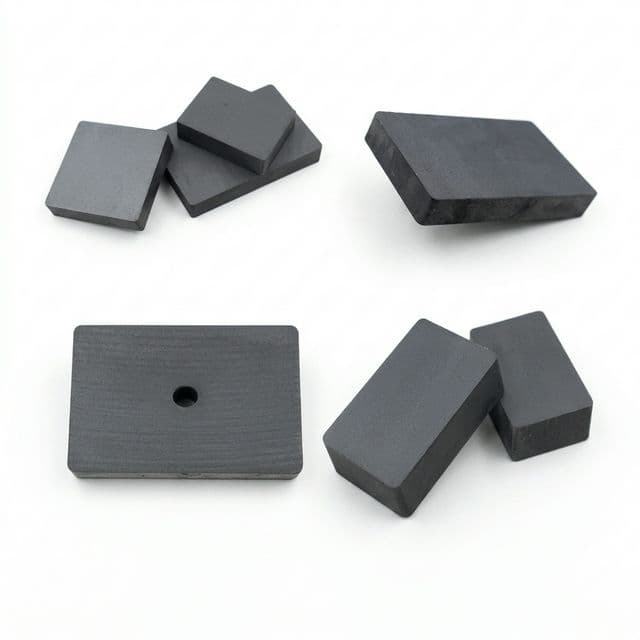
Flat rectangular ferrite bar magnets shown from multiple angles
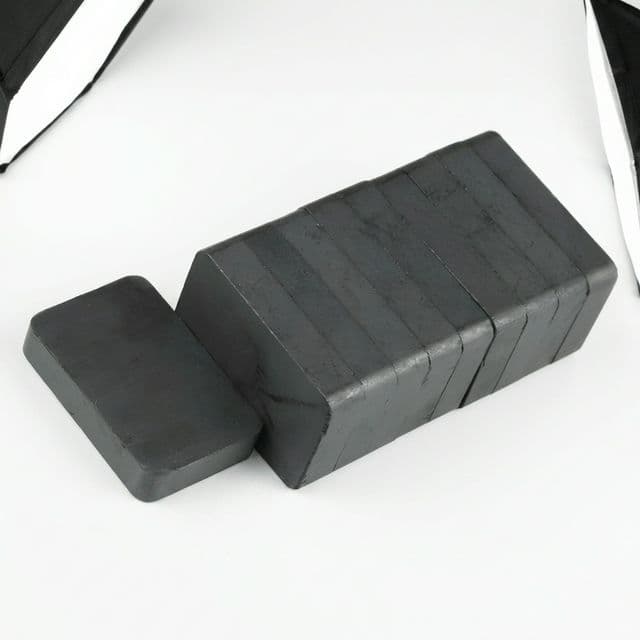
Stacked ferrite bar magnets prepared for bulk packing
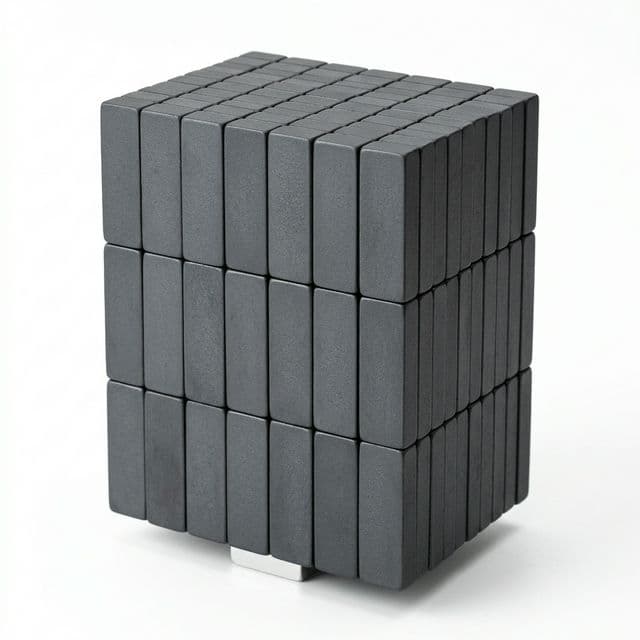
Ferrite bar magnets arranged in a vertical matrix pattern
ToolEvidenceBoundariesCompareRFQRisksFAQ
Decision summary

Evidence-backed conclusions for ferrite bar magnet buyers

The central decision is not whether ferrite is good or bad. It is whether the product envelope, magnetic circuit, operating environment, and cost target match what ceramic ferrite bars do well.

InputScoreBoundaryAction
"Bar of ferrite" is an alias, not a separate product family
For RFQ and search intent, the phrase should resolve to ferrite bar magnets: rectangular ceramic ferrite pieces specified by dimensions, grade, and magnetization direction.
Buyer action

Keep one canonical RFQ path on this page and describe any special fixture, sensor, holding, or education use case in the inquiry notes.

Evidence basis

OpenSpec alias decision for add-kw-bar-of-ferrite-page, archived July 18, 2026.

ferriteNdFeB
Ferrite wins when the envelope can grow
Ceramic ferrite generally has lower magnetic energy density than NdFeB, so the practical decision is not only material cost but whether the design can accept a larger bar or a magnetic circuit redesign.
Buyer action

Use the fit tool first. If the result is conditional, compare ferrite against NdFeB with the actual working gap and target holding force.

Evidence basis

MMPA Standard No. 0100-00 material grade tables and DOE NdFeB supply chain report composition context.

FerriteNdFeB
The cost advantage is quote-specific, not a universal index
Public sources support ferrite as a non-rare-earth ceramic magnet route, but they do not create a reliable universal finished-magnet price ratio. Grade, tooling, yield, freight, coating elimination, and packing can move the landed result.
Buyer action

Request a ferrite bar quote with volume breaks, tolerance class, magnetization fixture, packaging, Incoterms, and quote validity date.

Evidence basis

USGS 2026 strontium mineral commodity summary plus buyer-side RFQ variables.

humid or outdoor-friendly
Corrosion behavior is a real advantage, but chipping remains a risk
Ferrite bars are ceramic oxide magnets and normally avoid the plating stack required by many NdFeB parts. The tradeoff is brittleness, edge chipping, and fixture contact stress.
Buyer action

Specify edge acceptance, separators, drop-test needs, and whether the bar will be exposed to vibration or repeated mechanical impact.

Evidence basis

DOE NdFeB coating/supply-chain context and ceramic ferrite handling practice.

ferriteNdFeB
Temperature fit must include low-temperature demagnetization risk
Ferrite can be attractive for heat and corrosion exposure, yet some high-coercivity or low-temperature edge cases still require grade-level validation instead of assuming all ferrite bars behave the same.
Buyer action

State operating temperature, storage temperature, duty cycle, and whether the part will be measured before or after thermal conditioning.

Evidence basis

MMPA standard grade data and TDK ferrite magnet product guidance.

Supply risk changes shape rather than disappearing
Ferrite bars avoid rare-earth magnet dependence, but strontium carbonate, ceramic processing capacity, magnetization fixtures, and freight still matter for continuity.
Buyer action

For recurring programs, qualify the drawing, fixture, magnetization direction, and packing standard instead of only approving a one-time sample.

Evidence basis

USGS 2026 strontium summary, USGS 2026 rare-earth summary, and IEA 2026 rare-earth concentration reporting.

Facts and boundaries

What must be true before ferrite bars are the right answer

These facts keep the hybrid page grounded: the alias is handled, the tool boundary is explicit, and source-backed claims are separated from quote-specific assumptions.

FactEvidenceDate or scopeBuyer meaning
Canonical keyword mappingThe OpenSpec change resolves "bar of ferrite" into the canonical ferrite bar magnets page instead of creating a duplicate route.Decision archived July 18, 2026Use this page for both naming variants so RFQ, FAQ, and evidence stay in one place.
Tool validation rangeThe fit tool accepts positive dimensions up to 300 mm length, 300 mm width, and 150 mm thickness before asking for engineering review.Implemented July 2026Out-of-range bars can still be discussed, but they should move directly to drawing review rather than instant-fit assumptions.
Ferrite grade familiesPublic MMPA tables classify ceramic magnet grades such as C1, C5, and C8 with different remanence, coercivity, and energy product ranges.MMPA Standard No. 0100-00, public standardAsk for a grade or performance target, not only a material name.
Ferrite production routeUSGS describes strontium carbonate sintered with iron oxide as a route to permanent ceramic ferrite magnets.USGS Mineral Commodity Summary 2026Ferrite bars are not rare-earth magnets, but they still have mineral input and processing capacity dependencies.
Rare-earth magnet exposureUSGS and IEA reporting highlights high concentration in rare-earth processing and permanent magnet production.USGS 2026 and IEA 2026Ferrite can be a supply-risk alternative for designs that do not need NdFeB energy density.
Temperature behaviorMMPA and supplier guidance show ferrite has useful temperature resistance, while low-temperature and grade-specific demagnetization still need checks.Public technical guidance, reviewed July 2026State the full storage and operating temperature window in the RFQ.
Use-case fit

Common outcomes by application

Ferrite bars are strongest when the assembly can use area, backing steel, and moderate holding force instead of chasing the smallest possible magnet.

InputScoreBoundaryAction
Use caseLikely fitWhyNext step
Educational, display, and simple holding barsUsually strong fitThe design often accepts larger dimensions, modest field strength, and visible bar geometry.Confirm color, polarity marking, packing, and whether the part is magnetized through thickness or length.
Warehouse sweepers, separators, and tool holdersStrong to conditional fitFerrite bars can work well when assembled with steel backing or a circuit that concentrates flux.Share working gap, target debris type or holding force, and fixture drawings.
Sensor trigger bars and reed switch targetsConditional fitFerrite may work if the switching distance is modest and magnetization direction is controlled.Provide sensor model, activation distance, polarity requirement, and temperature range.
Compact motor, actuator, or latch designsOften comparison neededThe force-density gap versus NdFeB can make ferrite too large unless the design envelope can change.Request side-by-side ferrite and NdFeB options with the same air gap and target force.
Outdoor or humid assembliesStrong to conditional fitFerrite avoids many plating failure paths, but edge chipping, steel components, and adhesives still matter.Define moisture, salt exposure, adhesive, packaging, and whether the bar contacts metal directly.
Comparison

Ferrite bar magnets versus compact rare-earth alternatives

The fair comparison is assembly-level performance, not raw magnet label. Use the same working gap, steel target, pull-force fixture, packing expectation, and quote validity period.

CriterionFerrite barNdFeB barDecision signal
Magnetic energy densityLower, usually requiring more volume or circuit supportMuch higher, useful for compact forceIf the envelope is fixed and small, compare against NdFeB before committing to ferrite.
Material and supply exposureNo rare-earth magnet dependence, but strontium and ceramic processing capacity still matterRare-earth inputs and concentrated processing can dominate supply discussionsFerrite is useful when supply continuity outweighs compactness.
Corrosion pathCeramic oxide magnet, commonly used without platingOften needs coating or encapsulation for corrosion controlFerrite can reduce coating complexity in humid or outdoor assemblies.
Mechanical behaviorHard and brittle, vulnerable to edge chipping and impactAlso brittle, but usually smaller and often protected by coatingSpecify edge acceptance, separators, and handling tests for either option.
Thermal decisionUseful heat resistance, with grade and low-temperature demag caveatsStrong force in compact packages, but high-temperature grades and coatings affect costTemperature claims should be validated with the selected grade and circuit.
Finished price confidenceOften economical at volume, but tooling, tolerances, packing, and freight set the landed resultHigher raw material exposure, yet a smaller part may offset some system costAsk for landed cost at the same assembly-level performance target.
RFQ decision point

Ready to turn the ferrite bar screen into a quote?

Send the drawing when the envelope, magnetization direction, environment, and target force are known. If one input is still uncertain, use the checklist first so the quote is not built around a weak assumption.

Send ferrite bar RFQCheck RFQ inputs
RFQ checklist

The minimum data needed for a usable ferrite bar quote

The tool can prioritize the conversation, but the RFQ package decides whether samples and mass production can be inspected repeatably.

ItemIncludeWhy it matters
Dimensions and toleranceLength, width, thickness, tolerance class, chamfer or radius, flatness, and drawing revision.Bar geometry controls tooling, grinding yield, packaging, and whether the tool result is realistic.
Grade or magnetic targetRequested ferrite grade, Br/Hc/BHmax target, pull force target, or test fixture definition.A material name alone does not define magnetic performance.
Magnetization directionThrough-thickness, lengthwise, pair polarity, or multipole pattern with a sketch if possible.Wrong magnetization direction is a common failure mode for bars that otherwise match the drawing.
Environment and durabilityOperating and storage temperatures, humidity, vibration, impact exposure, and whether outdoor use is expected.Ferrite resists corrosion well, but assembly stress and thermal conditioning can still change acceptance.
Packing and logisticsMagnetized or unmagnetized shipment, separators, carton mass, labels, Incoterms, annual volume, and quote validity period.Packing and freight can decide whether the theoretical ferrite cost advantage survives landed cost.
Risk controls

Known risks and practical mitigations

A good ferrite bar magnet decision includes the cases where ferrite should not be forced into the design.

ProbabilityImpact
RiskLikelihoodImpactMitigation
Assuming the alias is a different productMediumMediumUse "bar of ferrite" as search wording, then specify the actual ferrite bar magnet geometry and magnetization.
Overselling cost advantageMediumHighQuote ferrite and alternatives against the same assembly target, volume tier, freight lane, and validity date.
Force-density mismatchHighHighValidate working gap and target holding force before replacing NdFeB with ferrite.
Wrong magnetization directionMediumHighAdd polarity marks, magnetization axis, and test fixture definition to the drawing package.
Low-temperature demagnetization or thermal driftLow to mediumMediumAsk for grade-specific review when storage or operating temperatures are near the edge of the expected range.
Chipping during packing or assemblyMediumMediumDefine edge acceptance criteria, separators, and inspection level before mass shipment.
Scenario checks

How the same ferrite bar can pass or fail depending on context

These examples connect the calculator result to buyer action instead of leaving the result as a score without interpretation.

Replacing a small NdFeB latch magnet
Conditional or low fit

Ferrite may require a larger bar or steel circuit to reach the same holding force.

Action

Run a side-by-side quote with identical gap and pull-force fixture.

Specifying a long holding bar for a tool rack
Strong fit

The product envelope can usually absorb ferrite volume, and steel backing can help concentrate flux.

Action

Send bar length, backing steel details, and target load per hook or contact point.

Outdoor sign or fixture with moderate force need
Strong to conditional fit

Ferrite avoids many coating concerns, but edge damage and fixture corrosion still need attention.

Action

Include humidity, salt exposure, adhesive, and packing requirements.

Sensor trigger in a tight plastic housing
Conditional fit

The result depends on switching distance, magnetization axis, and sensor threshold.

Action

Share sensor model, housing drawing, polarity requirement, and activation distance.

Sources and limits

Evidence trail for the report layer

Public technical and mineral sources support the direction of the conclusions. They do not replace supplier quotation data, sample testing, or drawing-specific inspection plans.

Traceable sources
Source dates are shown so time-sensitive supply and market context is not presented as timeless.
SourceScope
MMPA Standard No. 0100-00
Public standard; used for grade and temperature framing
Defines permanent magnet material classes and ceramic ferrite grade data used to avoid treating "ferrite" as one generic performance level.
USGS Mineral Commodity Summary 2026 - Strontium
2026 public mineral summary
Supports the strontium carbonate plus iron oxide route and the reminder that ferrite still has mineral input dependencies.
USGS Mineral Commodity Summary 2026 - Rare Earths
2026 public mineral summary
Provides rare-earth market context when ferrite bars are compared with NdFeB alternatives.
IEA Rare Earth Elements report
2026 report
Used for supply concentration context, not for a finished ferrite bar price claim.
DOE Rare Earth Permanent Magnets supply chain report
February 2022 report
Supports NdFeB composition, coating, and supply-chain comparison framing.
TDK ferrite magnet product guidance
Public product guidance; reviewed July 2026
Used as supplier-side context for ferrite magnet temperature and grade behavior.
Known limits
These constraints prevent the report from overstating what a public page can prove.
LimitControl
Finished magnet price cannot be proven from public raw-material summaries alone.

A fixed public ratio such as "80-90% cheaper" can mislead buyers.

The page now frames cost as a quote-specific landed-cost comparison with volume and validity date.
Pull force depends on the magnetic circuit, not only bar dimensions and grade.

A calculator can screen fit but cannot certify the assembly result.

The tool asks for RFQ follow-up and the report requires gap, steel, and fixture details.
Search wording for "bar of ferrite" is ambiguous between material, shape, and magnet product intent.

A standalone thin page would split authority and fail to answer buyers clearly.

The canonical page explicitly names the alias while preserving the ferrite bar magnets target.
Grade, magnetization fixture, and inspection practice vary by factory and drawing.

Public source tables are useful for screening but cannot replace lot-level approval.

The RFQ checklist asks for grade target, fixture definition, edge criteria, packing, and inspection needs.
FAQ

Ferrite bar magnet questions before RFQ

The FAQ is grouped around the decision flow: naming, engineering boundaries, and quote quality.

Alias and product selection

Engineering boundaries

RFQ and quality control

RFQ

Send a ferrite bar magnet drawing or target force

Inquiry Email

[email protected]

Share dimensions, grade target, magnetization direction, environment, annual volume, and the test method you want the quote to satisfy.

Open email appStart inquiry (opens email app)

Review cadence: page content, source dates, and tool boundaries were reviewed on July 19, 2026. Refresh public supply-market claims before using this page for a new annual pricing cycle.