
Preventing Micro-Cracks and Chipping in Ferrite Magnets: A Guide to Packaging and Logistics
Ferrite magnet packaging guide for OEM buyers: reduce chips and micro-cracks with RFQ specs, freight choices, AQL receiving checks, and source-backed limits.
For many procurement teams, securing a highly competitive piece-price for custom ferrite magnets feels like a sourcing victory. However, that victory is quickly erased if the components arrive at the assembly line with chipped edges or internal micro-cracks.
Because hard ferrite magnets are inherently brittle ceramics, transit handling can become the dominant source of late-stage physical defects even when sintering, grinding, and magnetization were in control. The cheapest packaging methods often lead to the highest Total Cost of Ownership (TCO) once scrap rates, line stoppages, and expedited replacements are factored in.
This ferrite magnet packaging guide gives procurement, engineering, and quality assurance (QA) teams a practical framework for specifying packaging, choosing air or sea freight, understanding magnetic-material air shipment limits, and conducting robust receiving inspections. Use it alongside the Ferrite RFQ checklist, the ferrite magnet tolerance guide, and the OEM ferrite supplier audit checklist when qualifying a supplier.
1. The Physics of Transit Damage: Chips vs. Micro-Cracks
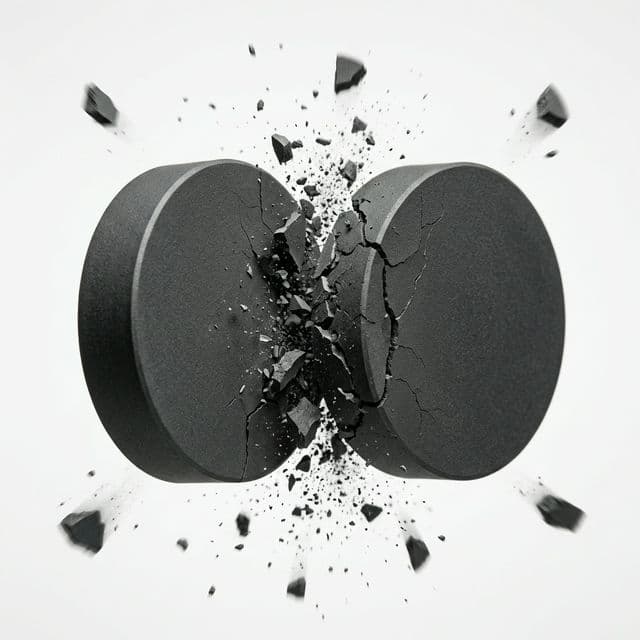
Sintered ferrite magnets do not bend; they chip, shatter, or crack under mechanical stress. When a pallet of magnets travels via sea freight or truck, it is subjected to constant low-frequency vibration and occasional high-impact shock.
- Cosmetic Chipping: Small chips on the edges (often allowed within specific visual tolerance limits, such as a maximum 1mm x 1mm chip) generally do not impact the magnetic flux. However, excessive chipping generates magnetic dust, which can contaminate bearings and tight air gaps in a motor assembly.
- Structural Micro-Cracks: This is the most dangerous defect. A micro-crack may be nearly invisible to the naked eye upon receiving. However, when the magnet is subjected to thermal shock (during an overmolding process) or mechanical stress (when glued into a rotor hub), the micro-crack propagates, causing catastrophic motor failure in the field.
2. Comparing Ferrite Packaging Methods: Cost vs. Risk
Specifying the correct packaging in your Request for Quotation (RFQ) is critical. Do not leave packaging to the supplier's discretion without understanding the trade-offs. The table below is intended for brittle sintered ferrite parts, especially ferrite arcs and segments, ferrite rings, machined blocks, and motor assemblies.
| Packaging Method | Protection Level | Space/Freight Efficiency | Labor to Unpack | Ideal Application / Geometry | TCO Impact |
|---|---|---|---|---|---|
| Bulk Bagging (Cardboard Box) | Very Low (Magnets crash together) | High (Maximum density) | Low | Cheap, un-machined blocks; low-value applications. | High Risk. Use only when cosmetic chips are contractually acceptable and incoming sorting is cheap. |
| Cardboard Grid / Honeycomb | Medium (Separates pieces) | Medium | Medium | Medium blocks and cylinders. | Moderate. Good balance for standard commercial applications. |
| Layered PE Foam / EVA Slots | High (Absorbs shock, full isolation) | Low (Foam takes up volume) | Medium | Fragile arcs, thin rings, machined blocks. | Low TCO. Minimal scrap; preferred for automotive/OEM. |
| Plastic Blister Trays | Very High (Robotic pick-and-place ready) | Medium | Low | High-volume automated assembly lines. | Lowest TCO. Zero touch time; zero transit damage. |
| Plastic Tubes | High | Medium | Low | Small discs and cylinders for automated feeders. | Excellent for mass production of small sensor magnets. |
| Returnable Plastic Totes with Dunnage | Very High (Rigid outer protection plus internal isolation) | Medium | Low to Medium | Regional closed-loop programs, validated assembly plants. | Strong for repeat OEM lanes; tote management must be controlled. |
| Steel-Shielded Air Cartons | Medium to High (depends on inner isolation) | Low (added steel weight) | Medium | Urgent prototypes or service parts shipped by air. | Expensive. Use only when schedule risk exceeds freight and shielding cost. |
3. Visualizing Transit Damage
Understanding how forces act on brittle ceramics helps buyers appreciate why isolating the magnets is so critical.
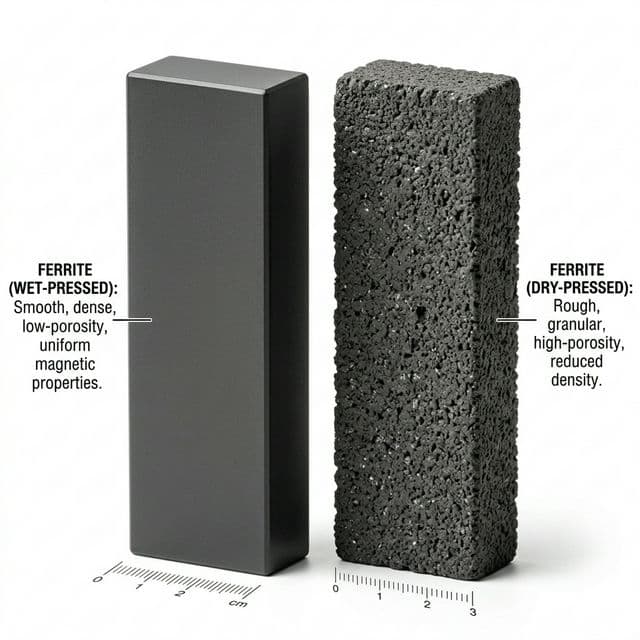
Visual Decision Aids
4. Air vs. Sea Freight: Magnetic-Material Limits and Demagnetization
When expediting ferrite magnets via air freight, buyers must navigate strict aviation regulations regarding magnetic fields.
- IATA Dangerous Goods Regulations: Magnetic material rules are handled under the IATA DGR framework. Confirm the current packing instruction and acceptance threshold with the carrier or forwarder before booking, because the shipper remains responsible for classification and packaging.
- Shielding: If the packed consignment exceeds the carrier's magnetic-field acceptance limit, suppliers typically add sheet steel or rearrange magnetized parts to shunt or cancel flux. Shielding is not a substitute for inner protection against chips.
- Cost Implications: Steel shielding adds weight to an already heavy shipment. Air freighting shielded ferrite magnets is expensive and should be reserved for prototypes, line-down recovery, or service parts.
- Sea Freight: Sea freight normally avoids magnetic-material air acceptance checks, but it increases vibration duration and pallet-handling events. This is the standard economical route for mass production only when cartons, pallets, and inner dunnage are validated.
- Demagnetization: Hard ferrite has high coercivity relative to ordinary logistics vibration. Physical shock will chip or crack the ceramic before vibration alone meaningfully demagnetizes a properly magnetized part.
5. Inbound Receiving & QA Inspection Checklist
To capture transit damage before the components hit the assembly line, QA teams must establish a receiving protocol. Standard acceptable quality limits (AQL) should be defined using ISO 2859-1:1999 sampling by attributes, then tightened for safety-critical or motor-critical assemblies.
Pre-Inspection (Dock Level):
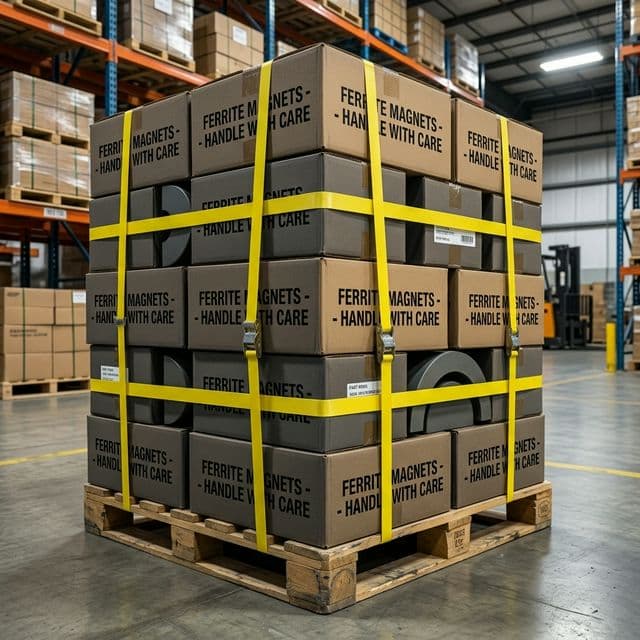
- Inspect pallets for visible crush damage, water stains, or broken strapping.
- Verify the pallet weight against the Bill of Lading (ferrite is heavy; a broken pallet base is common).
- Ensure cartons are tightly banded and wrapped to prevent shifting.
- Photograph pallet condition before unpacking if any carton is crushed, wet, or restacked.
Sample Inspection (QA Lab - ISO 2859-1 General Inspection Level II):
- Visual AQL (Chips): Check edges against agreed-upon visual standards (e.g., maximum allowable chip size 1mm x 1mm, maximum 2 chips per piece).
- Visual AQL (Cracks): Use a magnifying glass or microscope to check for hairline micro-cracks along the pressing axis. Reject any piece with a visible crack.
- Cleanliness (Debris): Wipe the magnet with a white cloth. Excessive black powder indicates that magnets have been colliding during transit, suggesting poor packaging.
- Magnetic Testing: Perform sample testing of the surface gauss or magnetic flux to ensure no anomalies (though ferrite is highly resistant to demagnetization from vibration).
- Containment Rule: If pallet damage, loose dunnage, or magnetic debris is found, quarantine that lot and inspect by carton position rather than pooling all samples.
- Assembly Risk Check: For magnets used in rotors, pumps, or overmolded parts, run a small thermal or press-fit stress trial before releasing the lot.
Decision Snapshot
| Buyer Situation | Packaging Decision | Receiving Decision | Contract Note |
|---|---|---|---|
| Low-value blocks with generous chip allowance | Cardboard grid, not loose bulk if ocean freight is rough | Normal AQL visual check | Define acceptable chip size and edge location |
| Thin arcs or rings for motor assemblies | EVA slots or blister trays | Tightened crack inspection plus debris check | Require inner isolation and carton drop/vibration validation |
| Automated assembly line | Blister trays or tubes compatible with feeders | Verify tray orientation and label traceability | Include pack-out drawing in the PPAP or first-article package |
| Line-down prototype air shipment | Steel-shielded outer carton plus foam isolation | 100% visual check on arrival | Confirm magnetic-material acceptance with forwarder before pickup |
| Crushed pallet corner on arrival | Quarantine impacted cartons | Inspect by carton position; consider stress test | Preserve photos and freight documents for liability review |
| Repeated chip claims on the same lane | Upgrade dunnage and pallet pattern | Track defects by lane and carton layer | Add corrective-action trigger after one repeated incident |
Packaging choice is a quality-control decision, not a clerical shipping detail
For brittle sintered ferrite, the lowest carton cost can create higher downstream cost through sorting labor, motor scrap, field failures, and emergency replenishment.
Recommended Action
Put the packaging method, chip limit, pallet pattern, magnetic-material air shipment requirement, and receiving AQL into the RFQ and purchase agreement before the first production lot.
Caution
Do not approve bulk bagging for machined arcs, thin rings, or overmolded motor magnets unless engineering has explicitly accepted cosmetic and fracture risk.
6. Frequently Asked Questions (FAQ)
Q: Our supplier wants to charge a 5% premium to switch from bulk bagging to EVA foam trays. Is it worth it?
A: Almost always, yes. If bulk bagging results in a 3% scrap rate, plus the labor cost of your workers sorting out broken pieces, plus the risk of a broken magnet destroying a $50 motor assembly downstream, the 5% packaging premium yields a massive positive ROI.
Q: Do ferrite magnets lose their magnetic strength from the heavy vibration of sea freight?
A: No. Hard ferrite has a high intrinsic coercivity (resistance to demagnetization). Physical shock will shatter the ceramic long before it alters the magnetic alignment.
Q: We received a pallet with a crushed corner. The outside boxes are damaged, but the magnets inside look okay. Should we accept them?
A: Treat them with extreme caution. The impact that crushed the box may have induced invisible micro-cracks in the magnets. Isolate that specific box, perform a 100% inspection, and consider a destructive stress test (like a thermal cycle) on a sample before using them in production.
Q: Who is liable for chips and cracks: the supplier or the freight forwarder?
A: This depends entirely on your Incoterms (for example, FOB vs. DDP), the agreed packaging standard, and whether the damage was caused by insufficient packaging or mishandling. Explicitly defining packaging validation, photos before dispatch, and receiving documentation in your supplier contract makes determining liability much easier. ICC's Incoterms rules are the commercial reference point; they do not replace a technical packaging specification.
7. Conclusion & Next Steps
Optimizing your ferrite magnet supply chain requires looking past the unit price and scrutinizing how the product is protected across thousands of miles of transit. By upgrading to protective packaging like foam trays or plastic blisters, and enforcing strict inbound QA checks, procurement teams can reduce the hidden costs of scrap and motor failures.
Need a resilient supply chain partner?
We engineer custom ferrite magnet solutions with logistics in mind. From optimizing geometries to reduce brittleness, to designing custom blister packaging for automated assembly lines, we ensure your components arrive flawlessly.
Contact our engineering team to discuss your next project at [email protected], or start with the custom machined ferrite magnet capabilities most often affected by transit chipping.
Evidence and Applicability Notes
Evidence and Applicability Notes
Last reviewed: 2026-06-24
Sources Used
- ISO 2859-1:1999 for AQL-based incoming inspection by attributes.
- IATA Dangerous Goods Regulations for magnetic-material air shipment classification.
- ASTM D4169 and ISTA test procedures for distribution-package performance validation.
- ICC Incoterms rules for commercial transfer-of-risk context.
Method
- Mapped common ferrite magnet geometries to handling risk: bulk collision, edge impact, vibration, pallet crush, and unpacking damage.
- Separated packaging protection from freight classification because magnetic shielding does not prevent ceramic chips.
- Converted receiving inspection into dock, lab, containment, and assembly-risk checks.
Applicability Boundary
- Applies to sintered hard ferrite magnets; flexible bonded ferrite and fully potted assemblies need different acceptance criteria.
- Chip-size examples are procurement starting points, not universal acceptance limits.
- Air shipment rules change by edition, carrier, route, and measured field strength; confirm before booking.
External References
| Source / Standard | Relevance to Packaging and Logistics | URL / Reference |
|---|---|---|
| ISO 2859-1:1999 | Sampling procedures by attributes. Use it to define AQL and inspection levels for chips, cracks, debris, and lot acceptance. | iso.org |
| ASTM D4169 | Performance testing of shipping containers and systems. Use it when validating cartons, foam, pallets, and distribution cycles. | astm.org |
| IATA Dangerous Goods Regulations | Current source for magnetic-material air shipment classification and acceptance requirements. | iata.org |
| ISTA Test Procedures | Distribution-package test procedures that can supplement ASTM-style validation for specific lanes and handling profiles. | ista.org |
| ICC Incoterms Rules | Commercial risk-transfer context for freight damage claims; use with, not instead of, technical packaging specs. | iccwbo.org |
Related Ferrite Sourcing Guides
Author

More Posts
Mid-2026 OEM Magnet Sourcing: Impact of the Magnets Value Chain Support Act & Tariff Updates
Decision brief for OEM engineers and sourcing managers on the 2026 tariff updates and the newly introduced Magnets Value Chain Support Act, and what it means for custom ferrite magnet procurement.
Ferrite vs Neodymium Magnets: B2B Selection Guide
A procurement-focused comparison of ferrite and neodymium magnets across cost, thermal stability, supply risk, and lifecycle fit.

Ferrite Magnet Overmolding Design: Thermal and Stress Boundaries
Engineering guide for insert molding ferrite magnets into plastics. Covers thermal demagnetization limits, stress cracking, and tooling DFM rules.
Inquiry Email
Copy the email, or open your default email app to start an inquiry.