LogoFerriteCustom
[email protected]
Hybrid Learn Page

Arc Fan Ferrite Magnet Y35: Tool-First Sizing Check and Sourcing Decision Report

Run a 2-minute arc fan ferrite magnet Y35 fit check, apply evidence-backed boundaries, and launch RFQ with clear tolerance, thermal, and supply-risk controls.

Published: May 6, 2026. Last updated: 2026-05-06.

Alias intents covered on this canonical page: "y35 arc ferrite magnet", "fan magnetic ring y35", and "motor arc ferrite y35".

Review cadence: quarterly evidence refresh. SERP and supplier snapshot refreshed on May 6, 2026. Next scheduled refresh: August 2026.

Run fit tool nowOpen inquiry template

Primary intent

Execute quick Y35 fit decision

Secondary intent

Understand method, risk, and tradeoffs

Source freshness

SERP snapshot dated May 6, 2026

Main CTA

Run tool -> launch RFQ with boundaries

Quick anchor navigation

Tool layer solves the immediate fit question. Report layer shows why the recommendation is trustworthy and where it can fail.

ToolSummaryMethodComparisonRisksFAQStage1b GapsSources

1) Tool Layer: run the Y35 arc-fan fit check first

Enter geometry, flux target, thermal and sourcing constraints. The output includes a fit score, boundary conditions, and the next action.
Arc-Fan Ferrite Magnet Y35 Fit Tool (2-minute estimator)

This tool gives a first-pass fit score for Y35 arc fan magnets in motor projects. It does not replace magnetic-circuit simulation, grade-level BH verification, or pilot validation.

Model range: 30-220 mm.

Model range: 20-170 degrees.

Model range: -40°C to 250°C.

Model range: 120-520 mT.

Empty state
Run the checker to get a directional fit score, key boundaries, and next-step action.
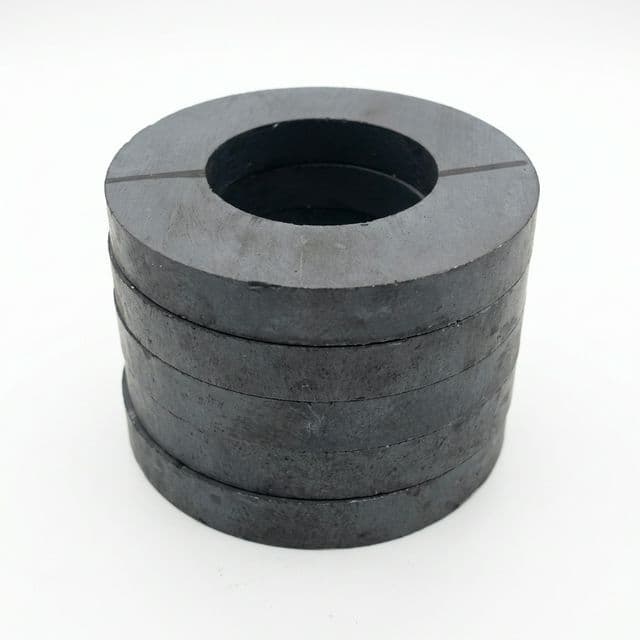
Large ferrite ring and arc magnet geometry reference for motor sourcing.
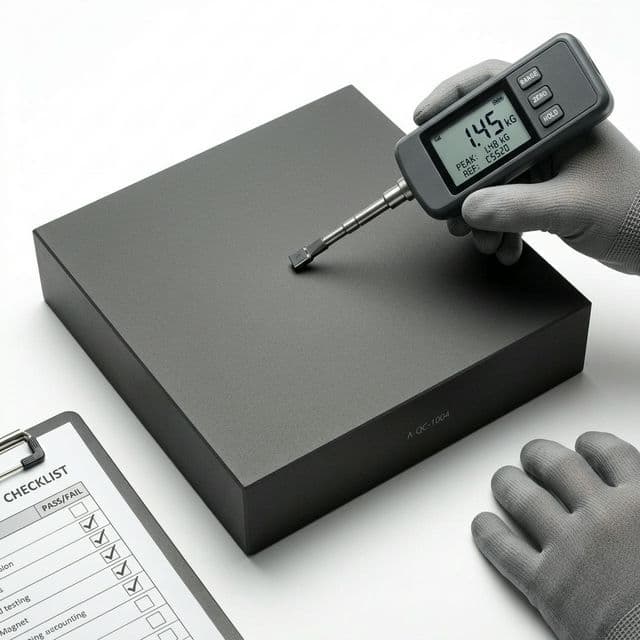
Gauss meter verification for ferrite magnet magnetic consistency.
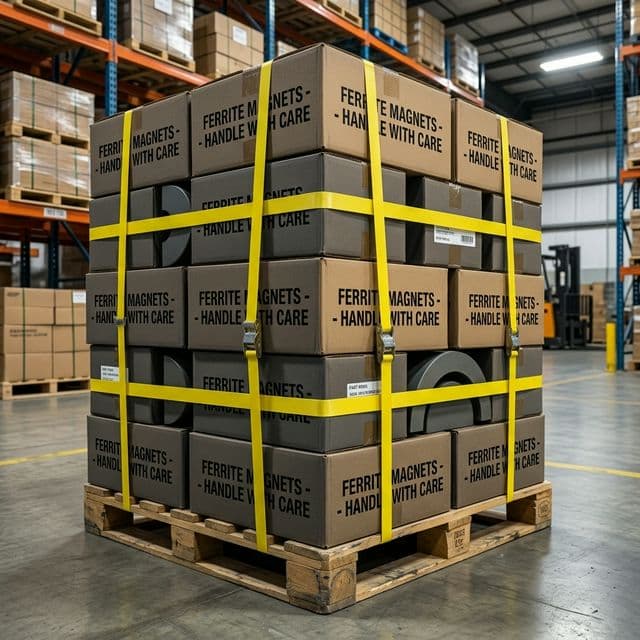
Palletized ferrite shipment ready for industrial motor supply.

2) Report Summary: core conclusions and who this page is for

These conclusions are decision-oriented. Each item shows applicability and boundaries.

InputScoreBoundaryAction
SERP intent is supplier-first, but decision confidence is missing
Snapshot on May 6, 2026: top results are mostly SKU pages (Alibaba, Made-in-China, supplier catalogs).

Users searching this keyword usually want immediate specification and quote readiness, not long theory. Tool-first UX is mandatory.

Suitable: Buyers who need quick go/no-go guidance before requesting samples.

Not suitable: Readers expecting a pure glossary page without dimensions, tolerances, or RFQ controls.

Source: SERP sampling for query "arc fan ferrite magnet y35" and close variants (May 6, 2026).

BrHcbHcjstronger coercivity usually trades with force-density ceiling
Y35 is usually a balanced grade, not a max-performance grade
MMPA table row includes class with Br 410 mT, Hcb 225 kA/m, Hcj 230 kA/m, BHmax 4.00 MGOe (31.8 kJ/m3).

Y35-class ferrite can be practical for fan motors, but high flux-density targets often require Y40 or rare-earth fallback validation.

Suitable: Programs prioritizing cost stability and corrosion tolerance with moderate flux targets.

Not suitable: Very compact assemblies where top-end energy product dominates the architecture.

Source: MMPA Standard 0100-00, Table III-1 (public PDF snapshot).

ODanglethicknessglue gapstack variance accumulates to torque ripple risk
Arc-segment tolerance control directly affects torque ripple risk
MMPA Table III-3 references gaging window of +/-0.006 in (+/-0.15 mm) on inner/outer radii checks.

Geometry drift can erase grade gains. OD, arc angle, and thickness control are as important as nominal magnetic grade in fan rotors.

Suitable: Teams locking fixture and grinding controls before mass-production PO.

Not suitable: Projects comparing suppliers only on grade label and piece price.

Source: MMPA Standard 0100-00, Table III-3 arc gaging notes.

samplepilotPPAPmassdelay usually comes from tooling + magnetization fixture reset
Thermal coefficients matter more than Curie headline in real motors
MMPA thermal properties: Br reversible coefficient about -0.2%/°C; Curie temperature around 450°C.

Curie temperature is not an operating target. You need thermal derating and measured air-gap flux under duty cycle.

Suitable: Motor programs with explicit thermal test plans and demag margin checks.

Not suitable: Programs using Curie number as direct approval criteria for field use.

Source: MMPA Standard 0100-00, Table III-5 thermal properties.

ProbabilityImpact
Ferrite lowers rare-earth exposure, but sourcing risk does not disappear
USGS 2026: ceramic ferrite magnets are ~14% of U.S. strontium end use, and U.S. strontium net import reliance is listed as 100%.

Ferrite avoids Nd/Pr dependence but still needs upstream resilience checks for strontium and process continuity.

Suitable: Sourcing teams planning dual-source and substitution fallback with lead-time buffers.

Not suitable: Single-source programs assuming ferrite automatically removes all supply risk.

Source: USGS Mineral Commodity Summaries 2026, strontium chapter snippet.

Suitable audience
  • Motor teams preparing Y35 arc-fan RFQ packages.
  • Procurement teams balancing unit cost and continuity risk.
  • Engineering leads who need a fast boundary check before simulation cycles.
Not suitable audience
  • Readers looking for final release criteria without pilot and simulation evidence.
  • Teams that only need retail product buying advice rather than OEM sourcing decisions.
  • Projects where geometry, materials, and test method are all still undefined.

3) SERP intent audit (anti-duplication evidence)

Distinct angle for this page: immediate tool execution + decision-grade guardrails, not another generic supplier list.

Observed patternEvidenceDecision impactPage response
Supplier listing / catalog SKUAlibaba, Made-in-China, and independent supplier catalogs dominate initial results.Users need fast quote-prep and fit screening on first screen.Tool-first hero with immediate scoring and actionable next step.
Claim-heavy specs with low boundary disclosureMany listings publish grade names and temperature claims but rarely include tolerance assumptions.Buyers risk false confidence when moving from quote to tooling lock.Explicit boundary state, tolerance tables, and risk controls.
Custom-size promise but unclear verification pathPages emphasize "customized size" with limited Cpk or process-control evidence.Potential mismatch between pilot sample and mass production consistency.QC baseline input in tool + supplier control checklist in report layer.
Little comparative decision supportMost results do not compare Y30/Y35/Y40/NdFeB by scenario boundaries.Teams overfocus on unit price and miss fallback planning.Structured comparison table and scenario-based recommendations.

4) Method and evidence layer

Stage1b content-gap audit and closure log
Audit timestamp: May 6, 2026. This table shows what was weak in the prior revision and how this round addressed it.
Gap foundWhy this was high-impactStage1b actionStatus
Core claims were mostly source-named but not source-linkable in-page.Users could not quickly verify high-impact conclusions before quote/tooling commitments.Added source URLs, timestamped evidence status, and dedicated source registry section.Closed
Supply-chain risk was directional but not quantified across ferrite vs NdFeB fallback.Without numeric exposure markers, teams tend to over-simplify "ferrite = no supply risk".Added USGS 2026 strontium and rare-earth import-reliance and export-control data in evidence and tradeoff tables.Closed
Regulatory/logistics failure modes were underexplained.Programs can pass technical fit but fail shipment readiness for air cargo.Added PHMSA aircraft prohibition threshold for magnetic field and linked it to packaging/test checklist actions.Closed
Standard-system boundary between legacy MMPA labels and current IEC classing was implicit.Grade mapping mismatches can create false equivalence in RFQ evaluation.Added explicit boundary notes: MMPA table remains useful as reference, but supplier release criteria should be locked to current IEC class + method.Partially closed
Decision method flow
Input -> score -> boundary -> action. Tool output is paired with source-backed interpretation.
InputScoreBoundaryAction
Source-backed fact table
Time-marked facts used in this page. Unknown or uncertain data is explicitly flagged.
FactValueDate/contextDecision implicationSourceEvidence status
Ceramic magnetic class example (MMPA table row)Br 410 mT, Hcb 225 kA/m, Hcj 230 kA/m, BHmax 4.00 MGOeMMPA 0100-00 public PDF (retrieved May 6, 2026)Y35-level positioning is generally balanced, but high-flux compact designs need fallback checks.MMPA Table III-1Verified with boundary note
Arc segment gage rulePass-through gage references outer radius +0.006 in and inner radius -0.006 in (+/-0.15 mm).MMPA 0100-00 public PDF (retrieved May 6, 2026)Dimensional control must be designed into supplier and incoming inspection plans.MMPA Table III-3Verified with boundary note
Ferrite Br temperature coefficientApprox. -0.2% per °C (reversible coefficient)MMPA 0100-00 public PDF (retrieved May 6, 2026)Room-temperature flux data cannot be used directly for high-temperature operation.MMPA Table III-5Verified with boundary note
Curie and structural temperature referencesCurie about 450°C; higher temperature can require remagnetizationMMPA 0100-00 public PDF (retrieved May 6, 2026)Curie value is not a direct field operating limit.MMPA Table III-5 notesVerified with boundary note
U.S. strontium exposure data pointNet import reliance listed as 100%; end-use estimate includes ceramic ferrite magnets at 14% share.USGS Mineral Commodity Summaries 2026 (released Jan 2026)Ferrite supply planning should still include upstream and substitution risk checks.USGS MCS 2026 Strontium chapterVerified
NdFeB fallback geopolitical exposure signalUSGS rare-earth chapter lists 67% U.S. net import reliance in 2025, with China as 71% of rare-earth imports; China also introduced additional medium/heavy rare-earth export controls in Apr/Oct 2025.USGS Mineral Commodity Summaries 2026 (released Jan 2026)If NdFeB is used as fallback, continuity planning must include export-control and import concentration monitoring.USGS MCS 2026 Rare Earths chapterVerified
Air-shipment magnetic field acceptance thresholdPHMSA states packages are forbidden on passenger/cargo aircraft if magnetic field exceeds 0.00525 gauss at 4.6 m (15 ft).PHMSA Forbidden Materials page (accessed May 6, 2026)Pre-shipment magnetic-field checks and shielding packaging should be part of RFQ and logistics planning for magnetized assemblies.PHMSA Forbidden MaterialsVerified
Current normative family for permanent magnet classesIEC 60404-8-1:2023 defines minimum magnetic-property values and, where applicable, physical dimensions/tolerances for permanent magnet materials.IEC webstore publication page dated Apr 13, 2023When supplier certificates are based on IEC classes, acceptance criteria should reference the matching IEC class + test method explicitly.IEC 60404-8-1:2023Verified

5) Tool boundary and geometry controls

Arc geometry window
radial thicknessODarc angle
Magnetization pattern checklist
radial split8/10/12 pole layout
Boundary table used by the fit tool
Input fieldPlanning windowWhy it mattersFailure mode if ignored
Rotor outer diameter30-220 mmToo small an OD can force high flux-density demand beyond typical Y35 comfort range.Undersized OD + high target flux drives forced grade escalation late in cycle.
Arc angle20-170 degreesArc split interacts with pole layout and ripple behavior.Large arc variation can cause pole imbalance and torque ripple complaints in pilot runs.
Radial thickness2-40 mmMagnet volume and saturation margin depend on this dimension.Thickness under-design shifts burden to higher energy grades or larger rotor redesign.
Target air-gap flux120-520 mTFlux demand is the fastest trigger for Y35 -> Y40 or NdFeB fallback.Overaggressive flux target creates low-yield pilot and unplanned tooling changes.
Operating temperature-40 to 250°CTemperature derating affects practical field strength under load.Ignoring thermal coefficients leads to false pass at room-temperature verification.

6) Comparison layer: Y30 vs Y35 vs Y40 vs NdFeB fallback

Grade comparison visual
Y30Y35Y40NdFeBmagnetic energy product trend
Decision comparison table
Not all rows have universal numeric equivalents across every standard. Use this as a scenario decision map, not a direct standards-conversion table.
OptionMagnetic windowWhen to useMain tradeoffFallback path
Y30 / C8-class ferriteLower baseline than Y35 classCost-first programs with wider torque margin and larger rotor envelope.Lower magnetic headroom, less tolerance to aggressive flux targets.Escalate to Y35 before switching material family.
Y35-class ferriteBalanced ferrite window for many fan motor programsDefault baseline when cost, corrosion behavior, and supply continuity matter together.Can fail in very compact or high-flux rotor requirements.Pilot against Y40 or NdFeB when flux demand is high.
Y40 / higher ferrite classHigher ferrite energy window than Y35 baselineNeed more output but still want ferrite chemistry and cost profile.Tighter process window and potential yield sensitivity.Keep NdFeB contingency for compact high-performance designs.
NdFeB fallback pathSubstantially higher energy-product familySevere package constraints or very high flux targets dominate.Higher material cost and higher rare-earth exposure risk.If supply risk spikes, redesign with ferrite volume compensation.
Supply and performance tradeoff matrix (stage1b increment)
This matrix adds new quantifiable constraints so fallback decisions are not made on unit price only.
DimensionY35 ferrite pathNdFeB fallback pathDecision signalSource
Upstream concentration signal (U.S. view)USGS strontium chapter lists 100% net import reliance; ferrite magnets are a named end-use bucket.USGS rare-earth chapter lists 67% net import reliance and 71% of imports from China in 2025.Both paths need continuity controls; ferrite reduces rare-earth dependency but is not zero-risk sourcing.USGS MCS 2026 strontium + rare earths
Policy/controls shockUSGS strontium chapter cites 2025 disruptions (reduced output in China, port/fire incidents affecting supply chain nodes).USGS rare-earth chapter cites additional Chinese export controls in April and October 2025 for selected medium/heavy rare-earth items.Keep time-phased dual-source and pre-approved alternates regardless of baseline material.USGS MCS 2026 chapters
Performance headroom reference pointMMPA table example for ceramic ferrite class: BHmax 4.00 MGOe (31.8 kJ/m3).MMPA NdFeB table row example (35/9) shows BHmax minimum 35-38 MGOe (279-303 kJ/m3).For compact high-flux packages, fallback to NdFeB may be technically necessary even when continuity risk is higher.MMPA 0100-00 Table III-1 and Table IV-1

Need a mid-cycle decision checkpoint?

When the score is conditional, send your geometry and boundary assumptions before tooling lock. We return an RFQ-ready review checklist.

Start RFQ review requestRe-run tool with updated inputs

7) Risk and mitigation layer

Risk heatmap
ProbabilityImpact
Lead-time bottleneck map
samplepilotPPAPmassdelay usually comes from tooling + magnetization fixture reset
Risk register with concrete mitigations
RiskProbabilityImpactTriggerMitigation
Grade-label mismatch across standards (Y35, C8/C10, IEC labels)MediumHighRFQ references only one shorthand grade without Br/Hcb/Hcj window.Freeze the quote spec with explicit magnetic-property minima and measurement conditions.
Arc geometry drift during scale-upMediumHighPilot OK but mass lot shows pole imbalance or torque ripple.Enforce arc gaging, dimensional Cpk targets, and rotor-level incoming checks.
Thermal derating underestimatedMediumHighRoom-temperature pass but high-load test underperforms.Run thermal map and demag margin tests under duty-cycle conditions before release.
Single-source dependency in ferrite chainMediumMediumLead-time spike or upstream material disruption.Set dual-source plan and maintain approved substitute geometry/grade package.
Quote optimized for unit price onlyHighMediumSupplier selected without tolerance and QC evidence.Use weighted decision matrix: magnetic fit + quality capability + continuity risk.
Overpromised customization lead-timeMediumMediumSample lead time acceptable, mass tooling change delays launch.Add tooling and fixture readiness milestones in supplier contract.
Boundary conditions and execution rules
These are decision boundaries. If they are not explicitly locked in RFQ/test methods, the tool output should be treated as preliminary only.
TopicBoundary conditionRisk if ignoredExecution ruleSource
Measurement method boundaryIEC 60404-8-1 defines class minima/tolerances; MMPA states principal measurements use closed-circuit permeameter with minimum sample geometry assumptions.Comparing two suppliers by label-only values can produce non-equivalent data and wrong go/no-go decisions.RFQ and acceptance should bind grade class + test method + temperature condition in one line item.IEC 60404-8-1:2023 + MMPA Appendix A
Thermal interpretation boundaryReversible Br coefficient and Curie point are different concepts; Curie is not operating-limit approval.Room-temperature pass can hide high-load demag or torque loss at operating temperature.Run duty-cycle thermal verification with explicit pass/fail margins before tooling lock.MMPA Table III-5
Air logistics compliance boundaryPHMSA lists aircraft prohibition threshold when package magnetic field exceeds 0.00525 gauss at 15 ft.Late-stage shipment rejection can break prototype or mass-production schedules.Add pre-shipment magnetic-field and shielding checks to supplier outgoing QC checklist.PHMSA Forbidden Materials

8) Scenario examples (assumption -> process -> outcome)

Scenario A: Ceiling fan platform refresh (cost + continuity)

Assumptions: OD 92 mm, arc angle 58°, thickness 11 mm, target flux 320 mT, annual 260k units.

Process: Tool score tends to strong/conditional boundary depending on QC baseline. Team runs Y35 pilot + one contingency sample.

Outcome: Y35 stays primary when Cpk and thermal checks pass; no material-family change needed.

Scenario B: Compact blower with tight package

Assumptions: OD 44 mm, target flux 440 mT, tight space constraint, elevated thermal demand.

Process: Tool flags low/conditional fit and risk matrix escalates compactness + flux conflict.

Outcome: Team keeps Y35 as cost baseline but validates Y40 and NdFeB in parallel before tooling lock.

Scenario C: Legacy motor re-source under lead-time pressure

Assumptions: Geometry fixed, flux requirement moderate, but primary supplier lead-time increased.

Process: Continuity-first sourcing mode and tolerance checklist drive dual-source onboarding.

Outcome: Program avoids emergency redesign by qualifying backup supplier with identical gage criteria.

Scenario D: High-temperature duty cycle complaint

Assumptions: Field returns appear in hot-season use; room-temp incoming checks were previously used.

Process: Thermal coefficient evidence triggers revalidation plan with load-temperature test matrix.

Outcome: Updated thermal acceptance gates reduce repeat failures and support stable PO release.

9) FAQ by decision intent

Intent: grade and geometry decision

Intent: sourcing and quality execution

Intent: risk and boundary interpretation

10) Stage1b evidence increment: unresolved data and next actions

Known unknowns (explicitly marked)
When evidence is weak, this page does not force conclusions. The table keeps only minimum executable mitigation paths.
QuestionCurrent statusDecision impactMinimum executable path
What is the public benchmark Cpk distribution for arc OD/ID/angle across Y35 motor suppliers?No reliable public cross-supplier dataset found in standards bodies or government open data.Cannot claim market-average process capability with confidence.Request supplier-level Cpk evidence by dimension and lot history before tooling freeze.
Is there an open transaction-grade price index specific to Y35 arc fan segments by tolerance class?No authoritative open index identified; public listings are mostly quote-driven SKU pages.Unit-price comparisons can be distorted without tolerance/test-method normalization.Run normalized RFQ template and compare total landed cost with same geometry + QC + logistics terms.
Can MMPA Y35 shorthand be universally mapped to one IEC 60404-8-1 class label?No reliable open dataset supports a strict one-to-one global mapping, and the MMPA page flags this standard as obsolete.Label-only equivalence decisions carry high misclassification risk.Require supplier certificates and lab reports with explicit measured Br/Hcb/Hcj/BHmax and method conditions.

Source registry and update log

Core evidence was refreshed in this stage1b round on May 6, 2026. Use these links for direct verification and rerun checks on the next quarterly refresh.

SourceSupportsUpdate/publication timeLink
USGS MCS 2026 - StrontiumFerrite upstream exposure, end-use split, and disruption notes for 2025.Publication January 2026; version history update posted April 16, 2026.Open source
USGS MCS 2026 - Rare EarthsNdFeB fallback geopolitical exposure, import concentration, and export-control events.Publication January 2026.Open source
PHMSA Forbidden MaterialsAircraft magnetic field prohibition threshold for shipment planning.Accessed May 6, 2026.Open source
IEC 60404-8-1:2023 webstore pageNormative classing scope for permanent magnet materials and tolerances.Published April 13, 2023 (IEC webstore listing).Open source
MMPA Standard 0100-00 PDF snapshotLegacy Y35 property windows, arc gaging, thermal coefficients, and NdFeB comparison row.Retrieved May 6, 2026; note MMPA page flags this standard as obsolete.Open source

Adjacent decision pages

Continue with these routes when you need broader material strategy or supplier execution details.

Inquiry Email

[email protected]

Copy the email, or open your default email app to start an inquiry.

Open email appStart inquiry (opens email app)
WhatsApp
LogoFerriteCustom

Factory-direct ferrite magnet manufacturing with OEM customization and stable global supply.

Inquiry Email

[email protected]

Copy the email, or open your default email app to start an inquiry.

Open email appStart inquiry (opens email app)
Products
  • Ferrite Discs
  • Ferrite Rings
  • Ferrite Arcs & Segments
  • Ferrite Blocks
  • Multipole Rings
  • Pot Magnets
  • Injection Molded
  • Custom Machined
Solutions / Applications
  • DC Motors
  • Speakers and Audio
  • Education and Crafts
  • Home Appliances
OEM Capabilities
  • Factory Profile
  • OEM Inquiry
Resources
  • About
  • Contact
  • Blog
  • Editorial Policy
  • Privacy Policy
  • Terms of Service
  • Cookie Policy
© 2026 FerriteCustom. All Rights Reserved.