
2026/06/24
Draft Research: The Impact of Product Carbon Footprint (PCF) Regulations on Ferrite Magnet Sourcing
Draft Research: The Impact of Product Carbon Footprint (PCF) Regulations on Ferrite Magnet Sourcing
Candidate Topics Considered
- The Impact of Product Carbon Footprint (PCF) Regulations on Ferrite Magnet Sourcing (Selected)
- Mitigating Quality Inconsistencies in High-Volume Ferrite Magnet Procurement
- Transitioning from Rare-Earth to Ferrite Magnets: A Buyer's Engineering & Cost-Benefit Guide
- The Hidden Costs of Sourcing Low-Cost Ferrite Magnets in 2026
- Miniaturization and Performance Limits: How Far Can Custom Ferrite Magnets Be Pushed?
Selection Rationale
- Why Topic 1? As of 2026, global frameworks like the EU’s Ecodesign for Sustainable Products Regulation (ESPR) and the Critical Raw Materials Act (CRMA) mandate PCF reporting and digital product passports. This directly impacts buyers who must secure verifiable carbon data to avoid "green-tariff" border penalties. It's a new, critical compliance issue with long-term purchasing and supplier-selection implications.
- Why not others? Topics 3 and 4 overlap with existing guides (
ferrite-vs-neodymium-guide.mdxandferrite-cost-advantage.mdx). Topics 2 and 5 are valuable but lack the urgent regulatory/compliance pain point that drives immediate sourcing decisions in 2026.
Information Increment for the Site
- Introduces the concept of ISO 14067 PCF methodologies specific to ferrite magnet sintering.
- Connects energy procurement (green tariffs/PPAs) to the final landed cost and risk model of the magnet supply chain.
- Provides actionable checklists for buyers auditing suppliers for ESG data, which hasn't been covered in previous cost/RFQ guides.
- Establishes a framework for anticipating "green-tariff" impacts.
Gaps in Competitor Pages
- Competitors typically treat sustainability as a generic "about us" page item.
- They rarely link PCF directly to actual procurement KPIs and hard border-tariff risks.
- Lack of actionable frameworks or supplier audit questions specifically regarding cradle-to-gate carbon footprints for ferrite manufacturing.
Key Sources
- Normative.io (Carbon Accounting): Explains the regulatory context of ESPR and CRMA for components.
- Circularise (Digital Product Passports): Mandates for PCF reporting and supply chain transparency.
- Global Battery Alliance / Green Energy Procurement: Information on Green Open Access and PPAs for energy-intensive manufacturing like sintering.
- Climatiq.io / LCA Models: Cradle-to-gate assessments including raw materials and energy-intensive processing.
- DMEGC Solar / Leading Magnet ESG Reports: Examples of top-tier manufacturers adopting LCA models to provide data to clients.
More Posts
NewsProduct
Mid-2026 OEM Magnet Sourcing: Impact of the Magnets Value Chain Support Act & Tariff Updates
Decision brief for OEM engineers and sourcing managers on the 2026 tariff updates and the newly introduced Magnets Value Chain Support Act, and what it means for custom ferrite magnet procurement.

Company
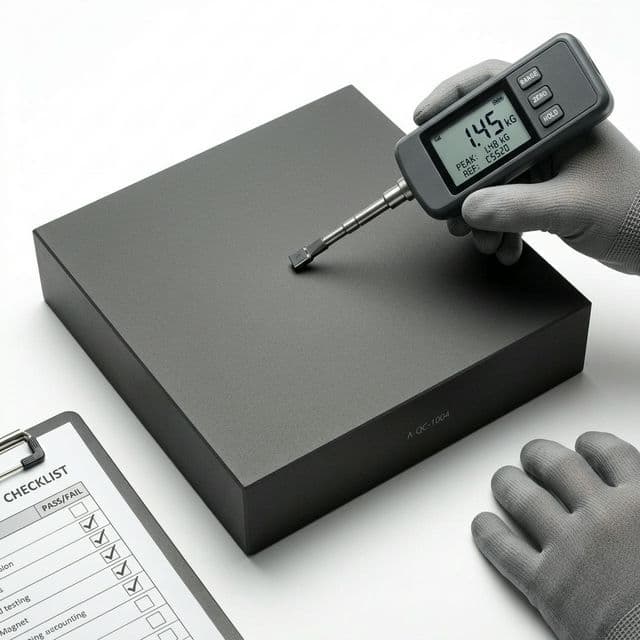
OEM Ferrite Supplier Audit Checklist
A buyer-side audit checklist covering process control, quality systems, and delivery reliability for ferrite magnet suppliers.

Product
Ferrite vs Neodymium Magnets: B2B Selection Guide
A procurement-focused comparison of ferrite and neodymium magnets across cost, thermal stability, supply risk, and lifecycle fit.
Inquiry Email
Copy the email, or open your default email app to start an inquiry.