LogoFerriteCustom
[email protected]
Hybrid page · tool + report

Arc Ferrite in China: Tool-First RFQ Readiness Check and Evidence-Based Decision Report

Use the arc ferrite in China fit checker to score RFQ readiness, validate tolerance and policy risks, and choose pilot or redesign actions before starting RFQ.

Published: 2026-05-06. Last updated: 2026-05-09.

Run fit checker nowOpen RFQ inquiry template

1) Run the fit checker first

This tool prioritizes immediate decision utility: you enter core sourcing and geometry constraints, get a result state, then move directly to the recommended next step.

Arc Ferrite in China Fit Checker

Tool scope: procurement-screening layer for arc ferrite programs. This checker does not replace magnetic-circuit simulation or signed quality agreements.

Annual demand (k pcs)

Target grade band

Outer diameter (mm)

Arc angle (deg)

Radial thickness (mm)

Target air-gap flux (mT)

Max operating temperature (°C)

Target lead time (weeks)

Tolerance tier

QC evidence depth

Sourcing path

Compliance tier

Shipping mode

Empty state
Use default values to run a baseline screen, then adjust one variable at a time to understand which constraint drives risk.

Alias intents covered on this canonical page: "arc ferrite in china", "china arc ferrite magnet", and "ferrite arc magnet from china".

Review cadence: quarterly evidence refresh plus policy-trigger refresh. SERP and source snapshot refreshed on May 9, 2026. Next scheduled refresh: August 2026, or within 72 hours after major customs-policy notices.

Routing metadata: source=intent-router · mode=hybrid · reason=ambiguous · confidence=low.

Tool-first quick navigation

Start with the checker, then move through evidence, comparison, and risk sections before final RFQ actions.
Fit toolSummaryEvidenceComparisonRisksFAQ
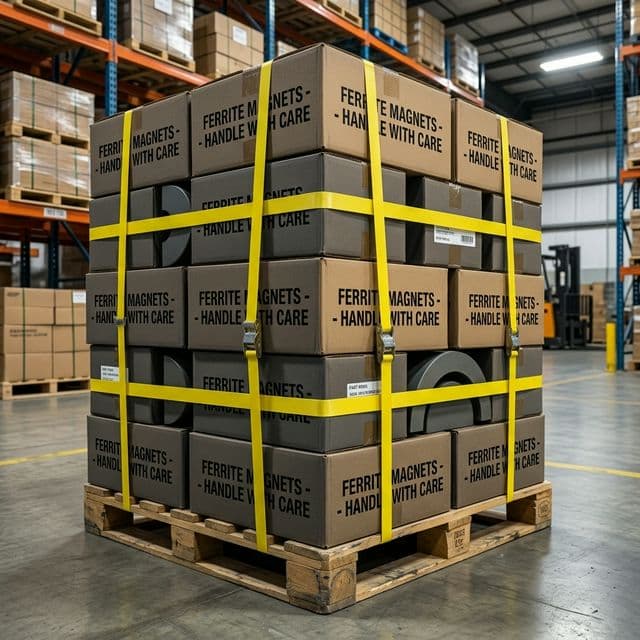
Export-ready ferrite arc magnet cartons staged for overseas shipment.
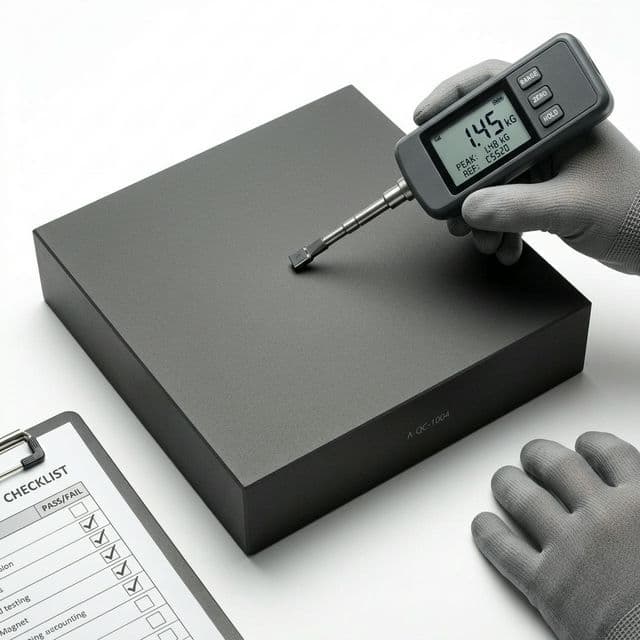
Quality engineer measuring ferrite magnetic consistency with a gauss meter.
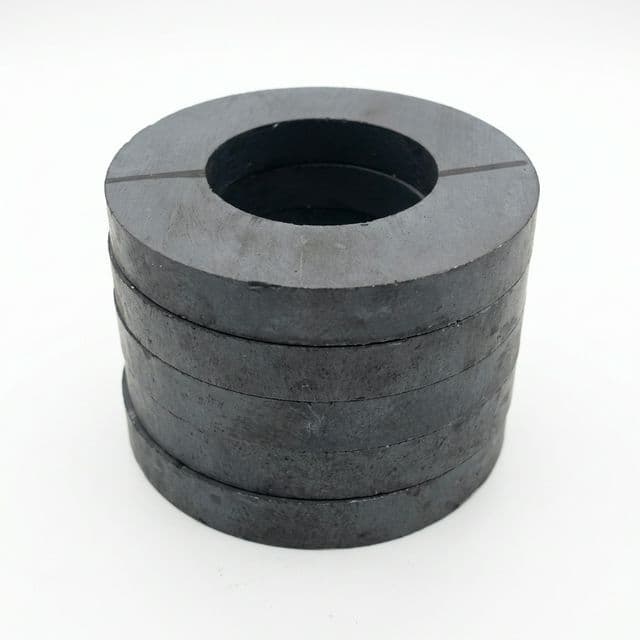
Ferrite geometry sample set used to validate arc and ring shape sourcing assumptions.

2) Report summary: what matters most

The summary layer converts sources and observed SERP patterns into decision statements. Each conclusion includes use/not-use boundaries.

RFQ inputboundary checksupplier screenpilot releaseTool output should end with a concrete next action
SERP intent is transaction-first, not education-first
May 9, 2026 snapshot for "arc ferrite in china" still shows supplier/product pages dominating first-page results.

Visitors expect immediate quote-readiness guidance. Tool-first interaction is mandatory before long-form explanation.

Suitable for

Buyers who need a rapid go/no-go screen before contacting suppliers.

Not suitable for

Readers expecting only theory with no actionable sourcing outputs.

Source: SERP sampling (Brave web results, query: "arc ferrite in china", retrieved May 9, 2026).

o.r. ref +0.006ini.r. ref -0.006intable III-3 gage window
Arc-segment tolerance is a major hidden failure driver
MMPA Table III-3 includes pass-through gage references around +0.006 in and -0.006 in for arc radius checks.

Price-only quote comparisons can fail if dimensional repeatability is not controlled at pilot and mass-production stages.

Suitable for

Programs with documented tolerance stack and incoming inspection criteria.

Not suitable for

Programs selecting suppliers only by grade name and price per piece.

Source: MMPA Standard 0100-00, section III and Table III-3.

ambient150C+Br reversible coeff. about -0.2%/C
Thermal derating matters more than Curie headline values
MMPA thermal table lists reversible Br coefficient around -0.2%/°C and Curie around 450°C for ferrite class context.

Curie is not an operating setpoint. Thermal duty-cycle data should gate RFQ release for motor use cases.

Suitable for

Teams running thermal validation before volume award.

Not suitable for

Teams using Curie number as direct operating approval criteria.

Source: MMPA Standard 0100-00, Table III-5 thermal properties.

MexicoGermanyChina+
China magnet trade depth is high, but HS data is not arc-specific
WITS (UN Comtrade source) reports China 2024 exports at US$3,236.8M for HS 850511 and US$502.7M for HS 850519.

Liquidity is strong for permanent-magnet trade lanes, but these HS rows aggregate multiple shapes and materials. Arc-ferrite capability still requires supplier-level evidence.

Suitable for

Teams prioritizing market-liquidity checks and destination-country demand signals.

Not suitable for

Teams trying to infer arc-segment process capability from HS totals alone.

Source: WITS country-product tables (source: UN Comtrade, accessed May 9, 2026).

CoA → Cpk/PPAP depth by project risk
US landed-cost assumptions can fail without policy checkpoints
Federal Register 2026-03824 sets a 10% temporary surcharge (Feb 24-Jul 24, 2026), and states this surcharge is in addition to other duties.

Quote decisions should use a landed-cost gate that includes HTS class, temporary surcharge window, and stacking logic.

Suitable for

US-route buyers who need PO-level cost and customs predictability.

Not suitable for

Teams approving RFQ only from EXW/FOB unit price without import-policy checks.

Source: USITC HTS archive + Federal Register 2026-03824 and R1-2026-03829.

toolingsamplemass rununder 6 weeks usually needs compromise
Rare-earth fallback risk increased with new export-control signals
IEA reports China accounts for 94% of sintered permanent-magnet production in 2024 and notes expanded export controls in January 2026.

If a ferrite program falls back to NdFeB, density may improve while continuity and policy risk increase; this path needs separate governance.

Suitable for

Teams evaluating ferrite redesign versus rare-earth material switch.

Not suitable for

Teams assuming NdFeB fallback is purely a performance upgrade without supply implications.

Source: IEA Rare Earth Elements executive summary (published 2026, accessed May 9, 2026).

3) SERP intent validation (stage1 baseline)

Snapshot date: May 9, 2026. This section explains why the page is intentionally tool-first instead of article-first.

Observed patternEvidenceDecision impactPage response
Supplier listing / product SKU pages dominateTop query results include supplier catalogs and marketplace product pages with RFQ-oriented copy.User expects fast operational guidance, not a pure educational article.Placed fit checker and result interpretation above the fold.
Specification claims without verification depthMany listings show grade labels and geometry claims, but do not expose process capability evidence by default.High risk of pilot-to-mass-production mismatch when procurement uses listing data as proof.Added boundary-state logic and mandatory evidence checklist next to tool output.
Lead-time promises are frequent but context-lightSupplier pages commonly promise short delivery cycles, while tolerance/QC scope is often unclear in public snippets.Teams can overfit on speed and underfit on quality consistency.Added lead-time, tolerance, and QC depth as coupled inputs in the tool.
Limited comparative decision supportSERP pages seldom compare factory-direct, marketplace, and dual-source paths with boundary conditions.Decision quality suffers when buyers optimize only unit price.Added structured comparison and risk matrix sections to convert output into action.

4) Method and evidence layer (stage1b enhance)

Stage1b closes trust gaps by making key claims source-backed, time-stamped, and boundary-labeled, including policy-sensitive landed-cost checkpoints.

Method flow
Tool output should feed evidence checks before any volume PO.
score inputverify boundariescollect evidencelaunch RFQ

Sequence: screen inputs → check model boundaries → map evidence depth → choose pilot or release path.

Stage1b gap closure table
Gap foundWhy this was high-impactStage1b actionStatus
China-side trade depth was discussed without quantified public data rows.Without volume and quantity anchors, users cannot benchmark whether sourcing options are market-liquid or niche.Added WITS/UN Comtrade-derived HS 850511 and HS 850519 rows with value, quantity, and implied unit-value context.Closed
HS-level data was not separated from arc-geometry-level decision logic.Teams may overfit HS averages to arc-segment procurement and misprice risk.Added explicit boundary notes that HS statistics are mixed baskets and not a substitute for arc-specific capability evidence.Partially closed
Customs-policy claims lacked direct text-level extraction for key clauses.In tariff-volatile windows, paraphrased policy can cause landed-cost errors and compliance misses.Revalidated Federal Register text for surcharge duration/stacking and de minimis suspension conditions.Closed
Rare-earth fallback discussion lacked latest 2026 control signals.Material-switch decisions can underestimate policy and concentration risk when using outdated assumptions.Upgraded evidence to IEA 2026 signal (94% sintered magnet share and Jan 2026 export-control expansion).Closed
EU compliance boundary lacked an explicit source-backed scope reminder.EU-bound EEE projects can fail at declaration/review stage even when technical performance is acceptable.Added RoHS scope signal (10 restricted substances and Annex II update link) into compliance checkpoints.Closed
Cross-region duty/de minimis comparables still lack one synchronized official open dataset.Users may incorrectly extrapolate U.S. policy logic to non-U.S. import lanes.Kept the item as an explicit open-data gap and enforced route-specific broker validation as minimum path.Partially closed
Public supplier-level Cpk and arc-only trade datasets remain unavailable.Evidence gaps can be misread as confidence and lead to one-step award risk.Retained explicit pending labels and minimum executable path (pilot evidence + broker-confirmed lane rules).Partially closed
Source-backed facts
Numeric and categorical facts with date context and reliability labeling.
FactValueDate/contextDecision implicationSourceEvidence status
Ferrite magnetic property class contextMMPA ceramic table includes rows around Br 410 mT, Hcb 225 kA/m, Hcj 230 kA/m, BHmax 4.00 MGOe.MMPA 0100-00 public PDF (retrieved May 9, 2026)Useful for screening; high flux-density compact designs may still require alternative path validation.MMPA Table III-1Verified with boundary note
Arc-segment gage referencePass-through gage notes include +0.006 in and -0.006 in references for arc radii checks.MMPA 0100-00 public PDF (retrieved May 9, 2026)Dimensional repeatability needs explicit control plan before volume PO.MMPA Table III-3Verified with boundary note
Ferrite thermal coefficient signalReversible Br temperature coefficient around -0.2%/°C.MMPA 0100-00 public PDF (retrieved May 9, 2026)Room-temperature magnetic values cannot be directly used for hot duty-cycle release.MMPA Table III-5Verified with boundary note
Curie reference contextCurie temperature around 450°C appears in ferrite thermal table context.MMPA 0100-00 public PDF (retrieved May 9, 2026)Curie value is not equivalent to safe application operating limit.MMPA Table III-5 notesVerified with boundary note
China export depth in permanent magnets (HS 850511)WITS reports China 2024 exports at US$3,236,762.64k and 130,756,355 kg for HS 850511.WITS country-product table (source: UN Comtrade, accessed May 9, 2026)Large trade depth supports supplier discovery, but this code is not specific to arc ferrite geometry.WITS CHN exports HS 850511 (2024)Verified with boundary note
China export depth in permanent magnets (HS 850519)WITS reports China 2024 exports at US$502,691.48k and 177,502,805 kg for HS 850519.WITS country-product table (source: UN Comtrade, accessed May 9, 2026)Mass availability exists, but HS-level statistics still require supplier-level filtering for arc-only capability.WITS CHN exports HS 850519 (2024)Verified with boundary note
U.S. strontium import relianceNet import reliance listed as 100% in 2025 estimate.USGS Mineral Commodity Summaries 2026 (released February 2026)Ferrite sourcing still benefits from continuity planning and supplier fallback design.USGS 2026 strontium chapterVerified
Strontium end-use share tied to ceramic ferritesCeramic ferrite magnets listed as 14% of U.S. strontium end use.USGS Mineral Commodity Summaries 2026 (released February 2026)Arc ferrite procurement depends on broader strontium supply stability.USGS 2026 strontium chapterVerified
Strontium upstream concentration signalUSGS import-source table (2021-24) lists celestite imports as Mexico >99%; total strontium imports Mexico 64%, Germany 31%.USGS Mineral Commodity Summaries 2026 strontium chapter (released February 2026)Dual-source policy should include upstream concentration checks, not only finished-magnet supplier count.USGS 2026 strontium import-source tableVerified
Rare-earth alternative path concentration signalUSGS rare-earth import-source table (2021-24): China 71%, Malaysia 13%, Japan 5%, Estonia 5%.USGS Mineral Commodity Summaries 2026 (released February 2026)If substituting to NdFeB for performance, continuity risk needs separate governance.USGS 2026 rare earths chapterVerified
Rare-earth chain concentration and control signalIEA reports China accounted for 94% of global sintered permanent-magnet production in 2024 and expanded export controls to selected rare-earth technologies in January 2026.IEA Rare Earth Elements executive summary (published 2026, accessed May 9, 2026)NdFeB fallback can improve compactness but should be governed as a separate concentration-risk path.IEA Rare Earth Elements (executive summary)Verified with boundary note
Latest public USITC HTS revision in this review windowUSITC archive lists 2026 HTS Revision 7 with publication date April 29, 2026.USITC HTS archive list (accessed May 9, 2026)Duty assumptions should be tied to a dated revision snapshot and refreshed before PO signoff.USITC HTS archive listVerified
US HTS base-duty signal for permanent magnetsUSITC HTS 2026 Revision 7 shows general duty rates including 8505.11.00 at 2.1% and 8505.19.30.00 at 4.9%.USITC HTS 2026 Revision 7 (published April 29, 2026)Landed-cost models should include declared HTS class and not rely on unit-price-only comparisons.USITC HTS 2026 Revision 7 JSONVerified with boundary note
Temporary U.S. import surcharge in 2026Federal Register 2026-03824 imposes a temporary 10% ad valorem surcharge for 150 days (Feb 24-Jul 24, 2026), and states it is in addition to other duties/taxes/fees.Federal Register publication date: February 25, 2026Buyer assumptions on landed cost can fail if award timing ignores active tariff windows.Federal Register 2026-03824Verified with boundary note
Duty-free de minimis suspension signal (US route)Federal Register R1-2026-03829 states 19 U.S.C. 1321(a)(2)(C) de minimis shall not apply to covered shipments regardless of value, country of origin, mode, or entry method.Federal Register publication date: April 9, 2026Small-lot or parcel assumptions should not bypass customs-duty planning by default.Federal Register R1-2026-03829Verified with boundary note
SERP composition for target keywordObserved first-page pattern is mostly supplier pages and marketplace SKUs rather than methodology-driven guides.Brave query snapshot (May 9, 2026)Tool-first page architecture aligns with dominant user intent.SERP snapshotVerified with boundary note
China trade-flow evidence (new in this round)
Added country-product export rows to separate market-liquidity signals from arc-geometry capability decisions.
HS rowDescriptionExport valueExport quantityImplied unit valueTop destinationsBoundary noteSourceEvidence status
850511Permanent magnets and articles intended to become permanent magnets (country-product slice in WITS).US$3,236,762.64k (2024, China exports)130,756,355 kgUS$24.75/kgUnited States, Germany, Mexico, Korea (Rep.), Thailand.HS-level volume is strong but includes non-arc and cross-application products.WITS CHN exports HS 850511 (2024)Verified with boundary note
850519Permanent magnets and articles intended to become permanent magnets (country-product slice in WITS).US$502,691.48k (2024, China exports)177,502,805 kgUS$2.83/kgUnited States, Germany, India, Japan, Mexico.Low implied unit value and mixed product basket indicate this row should not be used as an arc-only price benchmark.WITS CHN exports HS 850519 (2024)Verified with boundary note
Arc-segment-only customs datasetPublic customs datasets in this page scope are HS-level and do not isolate arc-ferrite geometry as a standalone statistical product code.N/AN/AN/AN/APending supplier-level shipment evidence is required to translate HS data into arc-segment award decisions.WITS HS code structure + open-data auditPending
Compliance boundary signals (new in this round)
Added rule-level checkpoints for policy-sensitive routes and RoHS scope control.
Control pointCurrent ruleWhy it mattersExecution ruleSourceEvidence status
US temporary surcharge windowA 10% temporary import surcharge is active for covered products (Feb 24-Jul 24, 2026 unless changed), and can stack with other duties.Unit-price-only RFQs can fail when surcharge stacking is omitted from landed-cost modeling.Tie commercial approval to a dated tariff snapshot and rerun landed-cost assumptions before PO lock.Federal Register 2026-03824Verified
US de minimis assumption boundaryEO 14388 republication states 19 U.S.C. 1321(a)(2)(C) does not apply to covered shipments regardless of value, origin, mode, or entry method.Parcel-lot economics can collapse if teams assume duty-free treatment by default.Treat de minimis as non-default and require route-specific broker confirmation for pilot and mass lanes.Federal Register R1-2026-03829Verified
US HTS branch selectionUSITC HTS Rev.7 shows multiple permanent-magnet branches (e.g., 8505.11.00 at 2.1%, 8505.19.30.00 at 4.9%).Commercial margin can flip when teams assume one duty branch while customs files another.Require broker-reviewed HTS rationale in the RFQ release package.USITC HTS Rev.7 JSON + archive listVerified with boundary note
EU RoHS substance-scope boundaryThe European Commission RoHS page states the directive currently restricts ten substances and links Annex II updates to Delegated Directive (EU) 2015/863.For EEE programs, material declarations and exemptions must be controlled before shipment to avoid compliance failure.Bind BOM-level declarations, exemption IDs, and latest legal review to each RFQ revision for EU-bound shipments.European Commission RoHS directive pageVerified with boundary note
Policy-sensitive checkpoints
These checks are scoped for policy-volatile lanes (especially U.S. entry planning) and should be refreshed before final PO.
CheckpointCurrent signalApplicable scopeExecution ruleSourceEvidence status
HTS classification checkpoint (US route)HTS 2026 Rev.7 lists multiple permanent-magnet branches (for example, 8505.11.00 at 2.1%, 8505.19.30.00 at 4.9%).Applies to U.S. import planning where final classification is declared at entry.Freeze landed-cost model only after broker-confirmed HTS class and product-scope notes are aligned.USITC HTS 2026 Revision 7 JSONVerified with boundary note
Temporary surcharge timing checkpointFederal Register 2026-03824 sets a temporary 10% ad valorem surcharge window from February 24, 2026 through July 24, 2026 (unless changed).Applies to U.S. entries during active policy windows and affected product scope.Model award timing with policy effective dates and include surcharge stacking in landed-cost assumptions.Federal Register 2026-03824Verified
De minimis assumption checkpointFederal Register R1-2026-03829 states 19 U.S.C. 1321(a)(2)(C) shall not apply to covered shipments regardless of value, origin, mode, or entry method.Applies to low-value and parcel workflows that historically depended on de minimis routing.Treat parcel-size imports as dutiable until confirmed otherwise by current CBP-compliant entry rules.Federal Register R1-2026-03829Verified
Fallback concentration checkpoint (NdFeB path)IEA 2026 reports China at 94% of global sintered permanent-magnet production in 2024 and notes added rare-earth export controls in January 2026.Applies when ferrite path is replaced by rare-earth-intensive alternatives.Treat NdFeB fallback as a separate continuity-risk scenario with dedicated inventory and supplier governance.IEA Rare Earth Elements (executive summary)Verified with boundary note

5) Tool boundary interpretations

These boundaries are visible so users can recover from non-usable tool states instead of forcing unsafe decisions.

Boundary visual cue
CoA → Cpk/PPAP depth by project risk

Evidence depth must scale with tolerance and program risk.

Sourcing path cue
document depth should increase with program risk

Discovery-first channels are valid, but award decisions need factory-level evidence depth.

Input boundary table
Input fieldPlanning windowWhy it mattersFailure mode if ignored
Annual demand (k pcs)10-10,000Very small runs skew economics; very large runs need factory-level throughput evidence beyond listing claims.Quote appears competitive but fails on sustainable cycle-time and shipment cadence.
Outer diameter (mm)25-260Extreme sizes can require process or tooling assumptions not captured in baseline model.Dimension acceptance shifts after sample stage, causing redesign or retooling.
Arc angle (deg)20-165Arc geometry affects magnetization layout and fixture repeatability.Magnetic distribution and mechanical fit diverge from expected motor behavior.
Radial thickness (mm)2-42Extremes elevate crack/chip risk and process variance sensitivity.First-article pass but mass lots show high reject rates.
Target flux (mT)180-500High flux request may exceed practical ferrite window for compact designs.Tool output overpromises; field performance under target.
Max operating temp (°C)-20 to 220Temperature directly impacts reversible Br and long-term margin.Hot-duty performance drift triggers warranty or redesign risk.
Target lead time (weeks)2-20Aggressive timelines compress evidence collection and process stabilization.PO award happens before quality system depth is validated.

6) Comparison and tradeoff layer

Use this matrix to pick between sourcing pathways and fallback strategies based on measurable constraints.

Option comparison
OptionMagnetic windowWhen to useMain tradeoffFallback path
Factory-direct ferrite path (Y35 baseline)Moderate flux; broad industrial applicabilityCost and continuity are key, and product size allows ferrite volume.May need larger magnetic volume compared with rare-earth options.Escalate to Y40 or hybrid architecture only after pilot evidence.
Marketplace listing pathVariable; often label-driven without full test contextFast market scan and supplier discovery stage only.Low documentation depth can mask tolerance and QC risk.Convert shortlisted listings to direct-factory evidence package before award.
Dual-source ferrite pathComparable grade target with cross-supplier checksContinuity-critical programs needing backup capacity and negotiation leverage.Higher onboarding effort and qualification complexity.Start with single pilot supplier, then qualify second source by same acceptance pack.
NdFeB fallback pathHigher energy-product potential for compact assembliesFlux-density requirements exceed realistic ferrite envelope after validation.Higher material and supply-concentration exposure, often with coating constraints.Use only where ferrite redesign is not viable within program timeline.
Redesign + ferrite retention pathKeep ferrite material but adjust geometry/packaging for target performanceWhen ferrite economics are preferred and architecture can absorb size shift.Mechanical and system redesign cost before launch.Run pilot with revised geometry before full commercialization.
Supply tradeoff table
DimensionFerrite pathAlternative pathDecision signalSource
Evidence depthCan achieve reliable outcome when CoA + dimensional capability + sample validation are explicit.Marketplace-only path is faster to start but often shallow on lot-level evidence.If evidence cannot be produced before award, delay PO and keep pilot gate active.MMPA measurement framing + SERP listing patterns (May 2026)
Thermal confidenceUse reversible temperature coefficient context and duty-cycle validation before release.Curie headline-only decision path appears fast but is decision-unsafe.Any hot-duty application above 150°C should require measured thermal margin evidence.MMPA Table III-5
Supply continuityFerrite avoids Nd/Pr chemistry but still needs strontium-side continuity checks.NdFeB fallback can improve compactness while increasing concentration exposure.Continuity-critical projects should keep dual-path scenario in governance review.USGS 2026 strontium + rare-earth chapters
Lead-time realism8-12 week windows generally support tooling/sample/quality closure.Sub-6-week targets often force unverified assumptions.If schedule cannot move, reduce tolerance complexity or split launch by phase.SERP observed offer patterns + model boundary constraints
Quality consistencyPPAP-style package and Cpk targets reduce pilot-to-mass surprises.CoA-only approval can miss process drift and dimensional tails.Higher volume or higher precision should trigger deeper evidence requirement.MMPA tolerance context + buyer execution practice
US landed-cost policy volatilityFactory-direct path can remain viable when HTS class and duty assumptions are verified before award.Unit-price-only screening can fail when surcharge windows or entry-rule changes become active.Before PO release, validate HTS class and current duty treatment using broker-reviewed entry assumptions.USITC HTS 2026 Rev.7 + Federal Register 2026 actions
Entry-method dependencyStructured entries with declared value/origin reduce surprises under policy changes.Parcel/de minimis assumptions can break when exemption rules shift.If using low-value shipments for pilot, verify current de minimis treatment before quoting landed cost.Federal Register R1-2026-03829

Need a mid-cycle RFQ decision checkpoint?

If your output is conditional or low, send geometry constraints and evidence assumptions before tooling lock so we can return a staged pilot checklist.

Start RFQ review requestRe-run fit checker

7) Risk layer and execution boundaries

Risk heat cue
prioritize high-impact + high-probability first

Prioritize high-impact and high-probability issues before PO approval.

Lead-time pressure cue
toolingsamplemass rununder 6 weeks usually needs compromise

Short schedules are possible only when evidence depth and tolerance expectations are jointly managed.

Risk matrix
RiskProbabilityImpactTriggerMitigation
Listing-to-factory capability mismatchMedium-HighHighSupplier cannot provide lot-level magnetic + dimensional records.Require pilot lot and evidence pack before awarding volume PO.
Thermal overconfidence from Curie-only interpretationMediumHighDecision uses Curie number without duty-cycle validation.Set thermal derating gate and require measured hot-condition margin.
Precision tolerance with shallow QC stackMediumHighPrecision tolerance target is requested while evidence depth is CoA-only.Escalate to Cpk/PPAP requirements or relax tolerance prior to award.
Lead-time compression riskHighMedium-HighSchedule under 6 weeks with no staged pilot milestone.Split pilot and mass release, or relax at least one hard requirement.
Single-source continuity exposureMediumMedium-HighNo fallback supplier and no inventory buffer policy.Implement dual-source plan and trigger-based buffer strategy.
Alternative-path concentration blind spotLow-MediumHighSwitching to NdFeB solely for compactness without continuity review.Require continuity/cost scenario review before material-family switch.
Landed-cost underestimation from duty-stack changesMediumHighAward model uses base unit price while temporary surcharge or additional duty treatment is active.Recalculate total landed cost against current policy window before PO approval.
HTS classification mismatchMediumMedium-HighCommercial and customs teams use inconsistent HTS assumptions for similar magnet SKUs.Lock product scope, HTS rationale, and broker signoff in the RFQ release checklist.
De minimis dependency failure on pilot lotsMediumMediumPilot-shipment economics depend on duty-free parcel treatment that is no longer valid.Use declared-entry planning for pilot economics and keep de minimis as a confirmed exception only.
Boundary rules table
TopicBoundary conditionRisk if ignoredExecution ruleSource
Magnetic grade assumptionsGrade label alone is insufficient; magnetic and dimensional evidence must align with application.Program accepts a grade name but fails functional target during pilot.Bind grade claims to measured lot-level data and geometry-specific validation.MMPA Standard 0100-00 section III context
Arc tolerance controlArc profile must be checked against documented gage logic and inspection method.Rotor balance and torque ripple issues emerge in field tests.Include arc gage acceptance rule in RFQ and incoming inspection plan.MMPA Table III-3
Thermal suitabilityCurie temperature cannot replace operating derating analysis.Magnetic margin collapse at elevated duty-cycle temperatures.Require temperature-specific flux margin validation before release.MMPA Table III-5
Lead-time claim validityShort lead-time promise must include explicit quality evidence scope.Launch slips due to pilot failures and requalification loops.Treat sub-6-week commitments as conditional until evidence package is accepted.SERP supplier pattern snapshot (May 9, 2026)
Supply-chain assumptionFerrite path still depends on upstream strontium availability and processing continuity.Procurement strategy underestimates raw-material-side disruption risk.Use dual-source and inventory-trigger policy for continuity-critical programs.USGS 2026 strontium chapter
Alternative material fallbackRare-earth fallback can solve density but introduces different concentration and cost risks.Material switch creates new continuity or cost shocks not modeled in plan.Run continuity scenario before approving NdFeB fallback.USGS 2026 rare earths chapter
HTS classification and duty boundaryPermanent magnet duty assumptions depend on declared HTS branch and product scope at entry.Quoted margin collapses when customs treatment differs from RFQ baseline assumptions.Validate HTS class and duty model against current customs guidance before PO release.USITC HTS 2026 Revision 7
Temporary surcharge window boundary (US route)Policy windows can add temporary ad valorem layers beyond base duty schedules.Procurement signs fixed-price agreements under outdated cost assumptions.Bind award date and landed-cost model to active Federal Register tariff windows.Federal Register 2026-03824
De minimis treatment boundaryLow-value shipping assumptions are policy-sensitive and may not remain duty-free.Pilot-lot economics and delivery method become non-viable at customs entry.Treat de minimis as non-default until confirmed by current entry rules for the specific lane.Federal Register R1-2026-03829

8) Scenario examples and open data gaps

Scenario A: Balanced motor program

Setup: 280k/year, Y35 target, 8-week lead time, tight tolerance, Cpk 1.33 expectation.

Tool outcome: Typically conditional-to-strong if sourcing path is factory-direct.

Recommended action: Proceed with pilot RFQ and require lot-level magnetic + dimensional records.

Scenario B: Fast launch with precision tolerance

Setup: 600k/year, precision tolerance, 4-week lead time, CoA-only QC expectation.

Tool outcome: Usually low fit due to lead-time and evidence mismatch.

Recommended action: Split into pilot phase, extend timeline, or relax tolerance target before awarding PO.

Scenario C: High-temperature application

Setup: Target operation above 170°C with high flux expectation and compact geometry.

Tool outcome: Boundary pressure appears quickly; ferrite path may need redesign or alternative material review.

Recommended action: Run thermal margin validation and compare ferrite redesign against controlled alternative-path options.

Scenario D: Continuity-critical global deployment

Setup: Distributed manufacturing, strict uptime SLA, medium flux demand, moderate lead time.

Tool outcome: Dual-source ferrite strategy often scores better than single-source speed-first path.

Recommended action: Adopt dual-source qualification and inventory-trigger governance early.

Known unknowns (explicit)
Data that remains uncertain is labeled clearly with a minimum executable continuation path.
QuestionCurrent statusDecision impactMinimum executable path
Public customs dataset that isolates arc-ferrite segments as a standalone product code?No reliable open HS-level dataset found that isolates arc geometry without mixed product baskets.Trade-volume benchmarks can guide liquidity checks but cannot directly support arc-segment supplier award decisions.Use HS rows for market context only; require supplier-level shipment and dimensional evidence for arc-segment execution.
Public benchmark for supplier-level arc ferrite Cpk distribution by tolerance tier?No robust cross-supplier public dataset identified.Cannot estimate capability distribution from public sources alone.Require supplier-specific pilot Cpk evidence before final sourcing decision.
Publicly normalized lead-time vs rejection-rate correlation for arc ferrite lots?Evidence is mostly anecdotal or supplier-specific marketing data.Schedule-risk modeling remains uncertain without project-level data collection.Track pilot cycle time and defect rate internally and update sourcing baseline quarterly.
Open dataset mapping grade labels to real lot-level magnetic spread?No universal open dataset with comparable methodology located.Grade labels alone cannot support award confidence.Bind grade claims to lot-level measured data in contractual acceptance criteria.
Commodity pass-through speed from strontium market changes to delivered arc ferrite pricing?Public price linkage is incomplete for finished magnet transactions.Cost-forecast confidence is limited for long-horizon fixed-price agreements.Use indexed-pricing clauses and quarterly renegotiation triggers in long-term contracts.
Cross-market validated benchmark for freight-mode impact on launch stability?No single open source provides complete launch-risk linkage by shipment strategy.Shipping decision may be over-optimized for short-term speed.Default to mixed strategy: air for pilot, sea for mass, with predefined trigger thresholds.
Cross-region duty and de minimis comparables for non-US import lanes?No single open dataset provides synchronized, lane-level duty/de minimis treatment across regions.Cannot safely extrapolate U.S. policy conclusions to EU, LATAM, or MENA import execution.Require route-specific broker validation and landed-cost refresh at least 72 hours before final PO.
Public dataset linking HTS subheading decisions to reject-rate and customs-delay outcomes?No robust open dataset found with SKU-level customs outcome benchmarking for ferrite magnets.Classification risk is hard to quantify statistically from open sources alone.Track internal customs outcomes by SKU/HTS decision and use quarterly risk re-baselining.

9) Evidence registry

All high-impact claims in this page map to one of the sources below with publication or retrieval date context.

SourceWhat it supportsLast updated/publicationURL
Brave SERP snapshot - query "arc ferrite in china"Intent pattern and tool-first architecture decisionRetrieved May 9, 2026Open source
MMPA Standard 0100-00 (permanent magnet specifications)Grade windows, tolerance context, thermal boundary framingPublic PDF retrieval on May 9, 2026Open source
WITS/UN Comtrade - China exports HS 850511 (2024)China-side market depth, quantity baseline, and destination pattern (not arc-only capability)2024 trade year; page accessed May 9, 2026Open source
WITS/UN Comtrade - China exports HS 850519 (2024)Additional China export basket context and unit-value contrast for mixed permanent-magnet rows2024 trade year; page accessed May 9, 2026Open source
USGS Mineral Commodity Summaries 2026 - Strontium chapterImport reliance and ferrite-linked end-use contextPublished February 2026Open source
USGS Mineral Commodity Summaries 2026 - Rare Earths chapterAlternative-path continuity caution for rare-earth fallbackPublished February 2026Open source
USITC HTS archive listLatest revision timestamp check in this review window (2026 Revision 7 dated April 29, 2026)Archive page accessed May 9, 2026Open source
USITC HTS 2026 Revision 7 JSONSpecific base-duty rows such as 8505.11.00 and 8505.19.30.00Published April 2026 (retrieved May 9, 2026)Open source
Federal Register 2026-03824 (Proclamation 11012)Temporary 10% surcharge window and rule that surcharge can stack in addition to other dutiesPublished February 25, 2026Open source
Federal Register R1-2026-03829 (Executive Order 14388)De minimis suspension boundary for covered shipments and route-level entry implicationsPublished April 9, 2026Open source
IEA Rare Earth Elements - executive summaryMining and processing concentration context for rare-earth fallback riskPublished 2026 (retrieved May 9, 2026)Open source
European Commission RoHS directive pageCurrent ten-substance restriction scope and Annex II update linkage for EU-bound EEE compliance checksPage accessed May 9, 2026Open source
USGS MCS 2026 master publicationPublication metadata and chapter consistency referencesPublished February 2026Open source

10) FAQ by decision intent

Tool Usage

Sourcing Decisions

Risk And Evidence

11) Next action

If the checker returns conditional/low/boundary, use a staged RFQ plan and pilot gate before committing to full-volume sourcing.

Start RFQ discussionOpen Y35 arc fan fit guideOpen China sourcing notes
Ferrite magnetic properties hubAnisotropic ferrite product pageManufacturer qualification pageSupplier comparison page

Inquiry Email

[email protected]

Copy the email, or open your default email app to start an inquiry.

Open email appStart inquiry (opens email app)
WhatsApp
LogoFerriteCustom

Factory-direct ferrite magnet manufacturing with OEM customization and stable global supply.

Inquiry Email

[email protected]

Copy the email, or open your default email app to start an inquiry.

Open email appStart inquiry (opens email app)
Products
  • Ferrite Discs
  • Ferrite Rings
  • Ferrite Arcs & Segments
  • Ferrite Blocks
  • Multipole Rings
  • Pot Magnets
  • Injection Molded
  • Custom Machined
Solutions / Applications
  • DC Motors
  • Speakers and Audio
  • Education and Crafts
  • Home Appliances
OEM Capabilities
  • Factory Profile
  • OEM Inquiry
Resources
  • About
  • Contact
  • Blog
  • Editorial Policy
  • Privacy Policy
  • Terms of Service
  • Cookie Policy
© 2026 FerriteCustom. All Rights Reserved. | Traded as Linkup Ai., Co Ltd