LogoFerriteCustom
[email protected]
Hybrid page · tool + report

Arc Ferrite Magnet Market: Tool-First Market Fit Check and Evidence-Based Sourcing Decision Report

Run a 2-minute arc ferrite magnet market fit check, then use verified trade, policy, and risk evidence to choose expand, watch, or delay and launch RFQ.

Published: 2026-05-15. Last updated: 2026-05-15.

Run market fit checkerView core conclusionsJump to evidence tables

1) Tool layer first: run the market fit checker

This first screen satisfies do-intent: input assumptions, get a deterministic result state, and move to a concrete action path.

Arc Ferrite Magnet Market Fit Checker

Tool scope: market-screening layer for arc ferrite sourcing decisions. This checker does not replace supplier audits, magnetic-circuit simulation, or legal/tax advice.

Empty state
Start with default assumptions, then change one variable at a time to find what drives market risk.

Alias intents covered on this canonical page: "arc ferrite magnet market", "ferrite arc market", and "arc ferrite magnets market analysis".

Review cadence: quarterly evidence refresh plus policy-trigger refresh. Source snapshot refreshed on May 15, 2026, including WITS 2024 trade rows, USITC HTS Revision 7 (published April 30, 2026), RoHS Annex II boundaries, and Federal Register windows active through April 2026 notices. Next scheduled refresh: August 2026.

2) Report summary for fast alignment

Before deep reading, align on three non-negotiables: data confidence, policy-date exposure, and supplier-level capability evidence.
demand inputsboundary screenmarket fitrfq actionTool output should map to one concrete next action
Who this page is for

Suitable for procurement and engineering teams evaluating arc ferrite market entry timing, sourcing mode, and risk controls.

Not suitable as a direct replacement for supplier audits, laboratory validation, customs advice, or signed contract terms.

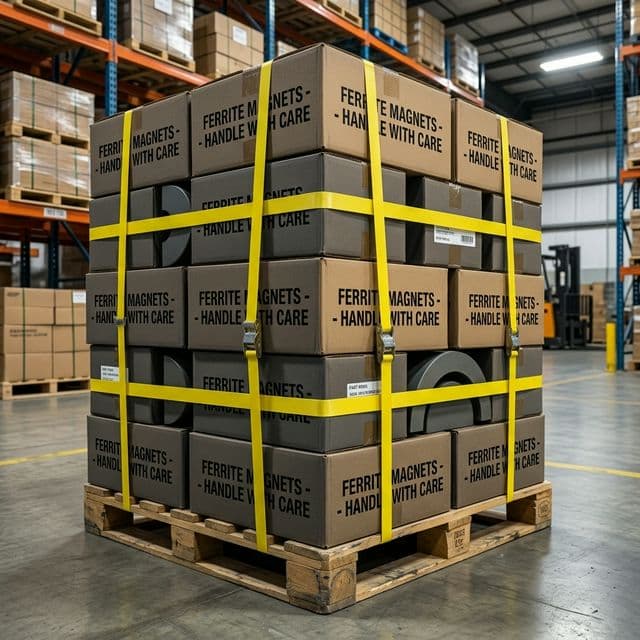
Palletized ferrite magnet shipments prepared for regional distribution lanes.
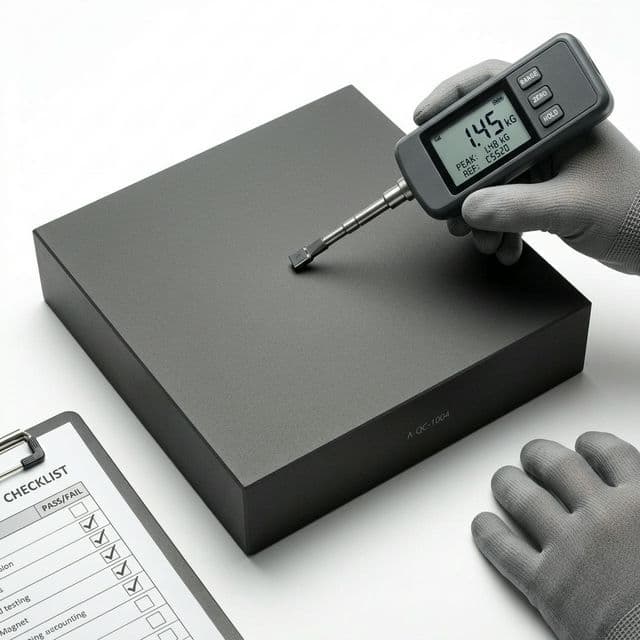
Quality engineer checking ferrite magnetic consistency before release.
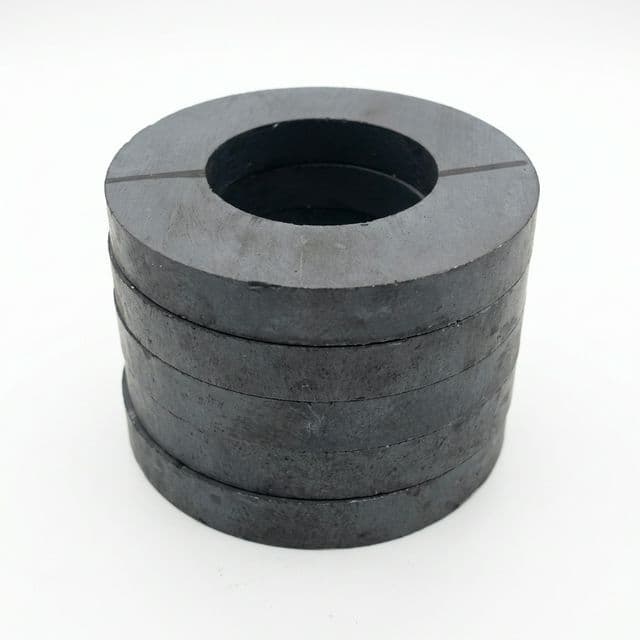
Ferrite geometry set used for market and sourcing fit validation.

3) Core conclusions and key numbers

Each conclusion includes metric, suitability boundary, and source trace.

demand inputsboundary screenmarket fitrfq actionTool output should map to one concrete next action
Intent is hybrid: users need an immediate decision and deep evidence
SERP snapshot on May 15, 2026 shows market-report pages and supplier catalogs in the same result set for "arc ferrite magnet market".

A single URL must satisfy tool-first do-intent, then prove trust with evidence and boundary disclosure.

Suitable for

Teams that need a fast go/watch/delay signal before supplier outreach.

Not suitable for

Readers expecting only a glossary without decision pathways.

Source: Brave SERP sampling for arc ferrite magnet market query set (retrieved May 15, 2026).

stable growth zonelow demandhigh demand
Trade depth is measurable, but HS rows are not arc-specific capability proof
WITS reports China 2024 exports at US$3,236,652.39k (HS 850511) and US$502,689.89k (HS 850519).

Market liquidity exists, but factory-level arc-segment consistency still needs supplier evidence.

Suitable for

Teams screening market depth before shortlisting suppliers.

Not suitable for

Teams inferring process capability only from aggregate customs codes.

Source: WITS/UN Comtrade country-product tables, accessed May 15, 2026.

HS 850511HS 850519~24.8 USD/kg~2.8 USD/kgmix signal only
Unit-value spread across HS rows signals mixed product classes
Implied unit value from WITS rows: HS 850511 about US$24.8/kg versus HS 850519 about US$2.8/kg for China 2024 exports.

Price assumptions must be mapped to exact geometry, tolerance, and magnetic grade before negotiation.

Suitable for

Commercial teams defining realistic quote bands and fallback options.

Not suitable for

Programs using one blended benchmark price for all arc-ferrite opportunities.

Source: Computed from WITS 2024 value and quantity rows for China exports HS 850511 and HS 850519.

top destination lanes move by segment
U.S. lane concentration differs sharply by customs row
WITS 2024 shows China share of U.S. imports at about 75.25% for HS 850511 and 47.39% for HS 850519.

Dual-source urgency depends on the specific customs row, not on one blended concentration assumption.

Suitable for

Teams deciding whether to prioritize backup-lane qualification before RFQ award.

Not suitable for

Programs that apply a single concentration-risk score to all ferrite SKUs.

Source: Computed from WITS U.S. 2024 imports (ALL vs China) for HS 850511 and HS 850519.

150-day windowrefresh cadence
Policy windows can change landed-cost outcomes mid-cycle
Federal Register 2026-03824 states a temporary 10% ad valorem surcharge for 150 days, in addition to other duties and fees.

Award decisions need a dated policy checkpoint, not static annual assumptions.

Suitable for

Import lanes with exposure to U.S. customs-policy changes.

Not suitable for

Teams approving suppliers from EXW or FOB price alone.

Source: Federal Register 2026-03824, published February 25, 2026.

150-day windowrefresh cadence
HTS subheading choice can move base-duty assumptions
USITC HTS 2026 Revision 7 lists 8505.11.00 at 2.1% (general) while 8505.19.30.00 is 4.9% (general), with 45% column-2 rates.

Do not finalize pricing until SKU-level classification is confirmed for the destination lane.

Suitable for

Teams building landed-cost models and quote-validity clauses for U.S. imports.

Not suitable for

Teams assuming one duty number applies to all arc-ferrite configurations.

Source: USITC Harmonized Tariff Schedule 2026 Revision 7 JSON, published April 30, 2026.

gap
Upstream material concentration remains a market boundary
USGS MCS 2026 lists U.S. strontium net import reliance at 100% (2025 estimate), with ceramic ferrite magnets about 14% of end use.

Ferrite market planning still needs continuity controls on strontium supply and substitution pathways.

Suitable for

Teams building dual-source or safety-stock rules in sourcing policy.

Not suitable for

Single-source plans assuming ferrite fully removes supply-chain risk.

Source: USGS Mineral Commodity Summaries 2026, strontium chapter.

SERP intent pattern table

Observed patternEvidenceDecision impactPage response
Forecast-led market report pages dominate part of page oneResearchAndMarkets, SkyQuest, and ResearchNester style report pages are prominent in the first result set.Users receive conflicting market-size narratives and need a confidence boundary before acting.Added forecast-variance table and explicit evidence-confidence labels.
Supplier catalogs and marketplaces appear alongside reportsTrade platforms and supplier listings remain visible for the same keyword cluster.Users want immediate go/no-go guidance before reading long analysis.Tool-first hero with deterministic result states and next-step CTA.
Most pages omit policy and customs timing windowsCommon listings highlight price and grade but rarely anchor policy-effective dates.Landed-cost planning can break when temporary rules overlap award windows.Policy checkpoint table with effective windows and execution rules.
Arc-segment capability boundaries are rarely explicitMany pages market "custom size" without measurable tolerance or lot-consistency evidence.Buyers risk converting market opportunity into execution failure.Boundary table and scenario playbook tied to tool outputs.

4) Methodology and evidence layer

Method flow
serptradepolicytool scoreFinal decision = fit score + boundary notes + supplier evidence
Evidence confidence
gap
Source fact table
FactValueDate/contextDecision implicationSourceStatus
China export depth in permanent magnets (HS 850511)US$3,236,652.39k; 130,756,000 kgWITS source year 2024 (accessed May 15, 2026)Large traded value indicates broad market activity; still not arc-only capability evidence.WITS CHN exports HS 850511Verified with boundary note
China export depth in other permanent-magnet row (HS 850519)US$502,689.89k; 177,503,000 kgWITS source year 2024 (accessed May 15, 2026)High quantity with low unit value suggests mixed lower-value magnet segments in this row.WITS CHN exports HS 850519Verified with boundary note
Implied unit-value spread from customs aggregatesHS 850511 about US$24.8/kg vs HS 850519 about US$2.8/kgDerived from WITS 2024 value and quantity rows (computed May 15, 2026)Market comparisons need geometry/tolerance segmentation before quote strategy.Internal calculation from WITS rowsVerified
Temporary U.S. surcharge policy windowAdditional 10% ad valorem duty for 150 daysFederal Register publication date: February 25, 2026Award timing and shipment schedule must include effective-date checks.Federal Register 2026-03824Verified
De minimis exclusion for covered shipments19 U.S.C. 1321(a)(2)(C) de minimis treatment shall not apply to covered imports regardless of value/mode/origin.Federal Register publication date: April 9, 2026Small-parcel tactics cannot be assumed as stable landed-cost mitigation.Federal Register R1-2026-03829Verified
U.S. import concentration for HS 850511 (from China)US$359,791.11k of US$478,125.34k total imports (about 75.25% by value)WITS 2024 imports by country (page refreshed May 14, 2026 ET)High lane concentration raises continuity risk if single-country sourcing is assumed.WITS USA imports HS 850511 (ALL countries)Verified
U.S. import concentration for HS 850519 (from China)US$58,184.41k of US$122,766.84k total imports (about 47.39% by value)WITS 2024 imports by country (page refreshed May 14, 2026 ET)Concentration is lower than HS 850511, so risk controls should be code-specific.WITS USA imports HS 850519 (ALL countries)Verified
HTS duty spread across permanent-magnet subheadingsUSITC HTS 2026 Rev.7 lists 8505.11.00 at 2.1% (general) and 8505.19.30.00 at 4.9% (general), with 45% column-2 rates.USITC JSON last modified April 30, 2026SKU classification impacts landed cost and must be validated before quote lock.USITC HTS 2026 Revision 7 JSONVerified
EU RoHS homogeneous-material thresholds for EEEAnnex II lists 10 restricted substances; limits are 0.1% each except cadmium at 0.01% by weight in homogeneous materials.Directive (EU) 2015/863, OJ L 137 (published June 4, 2015)Market entry for EEE use-cases requires material declarations, not only magnetic performance data.EUR-Lex CELEX:32015L0863Verified
HTS subheading fit for each arc ferrite SKUNo reliable public mapping from arc geometry/grade to final entry subheading across all destination customs procedures.Status as of May 15, 2026Duty modelling remains provisional until broker and customs-classification review is complete.Open-data boundaryPending
U.S. strontium import reliance contextNet import reliance listed as 100% in 2025 estimateUSGS Mineral Commodity Summaries 2026 (February 2026)Ferrite planning still requires upstream continuity buffers.USGS 2026 strontium chapterVerified
Strontium end-use share for ceramic ferrite magnetsAbout 14% of U.S. strontium end useUSGS Mineral Commodity Summaries 2026 (February 2026)Arc ferrite demand is linked to broader strontium market dynamics.USGS 2026 strontium chapterVerified
Thermal coefficient boundary for ferrite class contextReversible Br coefficient around -0.2%/C; Curie around 450CMMPA 0100-00 public PDF (retrieved May 15, 2026)Market demand claims should be filtered through operating-temperature constraints.MMPA Standard 0100-00, Table III-5Verified with boundary note

5) Market variance, customs classification, and lane concentration

Primary planning evidence in this section is based on WITS, USITC, Federal Register, and EUR-Lex sources. Commercial market reports are retained only as secondary directional inputs.

Unit-value spread visual
HS 850511HS 850519~24.8 USD/kg~2.8 USD/kgmix signal only
Destination lane visual
top destination lanes move by segment
Forecast variance table
ProviderBaseline claimHorizon claimImplied CAGRConfidence boundary
ResearchAndMarkets snippetUS$8.9B (2024)US$11.7B (2030)4.6%Commercial report snippet only; full methodology behind paywall and may include broader segment assumptions. Source
SkyQuest snippetUS$8.66B (2025)US$13.39B (2033)5.6%Different baseline year and taxonomy can inflate comparability noise versus other reports. Source
ResearchNester snippetUS$9.34B (2024)US$21.18B (2037)6.5%+Long horizon magnifies uncertainty; use as directional signal, not as standalone budgeting baseline. Source

Boundary: these provider pages are commercial secondary sources with partially opaque methodologies. Use as scenario range only.

Trade depth and policy checkpoints
HS code/groupDescriptionExport valueQuantityImplied unit valueDestination signalBoundary noteStatus
850511Permanent magnets of metal (customs aggregate row)US$3,236,652.39k130,756,000 kgUS$24.75/kgTop-5 destination share is about 53.23% (Germany, U.S., Vietnam, Korea, Japan).Includes mixed magnet segments; cannot isolate arc ferrite process capability. WITS CHN exports HS 850511 (2024)Verified with boundary note
850519Other permanent magnets (customs aggregate row)US$502,689.89k177,503,000 kgUS$2.83/kgTop-5 destination share is about 41.80% (Vietnam, India, U.S., Japan, Mexico).Low implied unit value indicates broad product mix; use only for liquidity context. WITS CHN exports HS 850519 (2024)Verified with boundary note
Cross-row viewValue-density divergence across customs rows850511 value about 6.4x of 850519850519 quantity about 1.36x of 850511Large spread (about 8.7x)Destination mix shifts by row; region strategy should be segment-aware.Customs aggregation is not a substitute for SKU-level quote evidence. Derived from WITS 2024 rowsVerified
Policy signalCurrent ruleEffective windowExecution ruleStatus
Temporary reciprocal surcharge10% additional ad valorem duty for 150 days and in addition to other duties/taxes/fees.From Feb 24, 2026 through Jul 24, 2026 unless amended.Bind quote validity windows to policy-effective dates and include reprice clauses. Federal Register 2026-03824Verified
Suspension of duty-free de minimis treatment19 U.S.C. 1321(a)(2)(C) treatment does not apply to covered imports regardless of value, origin, mode, or entry method.Federal Register publication date: Apr 9, 2026.Do not build market-entry economics on small-parcel exemptions for covered lanes. Federal Register R1-2026-03829Verified
HTS annex-exception mapping for ferrite SKUsPublic proclamation texts include annex-driven exceptions, but SKU-level applicability is not fully derivable from open summaries.Status as of May 15, 2026.Treat tariff outcomes as pending until broker classification and annex mapping are completed. Federal Register + USITC HTS Rev.7Pending
HTS rowDescriptionGeneral rateSpecial rate noteColumn 2 rateDecision boundaryStatus
8505.11.00Permanent magnets "of metal" parent row; includes statistical breakout 8505.11.00.30 (ceramic).2.1%Free for listed preference partners (per USITC schedule notation).45%Do not assume all arc ferrite lots belong to the same subheading without broker validation. USITC HTS 2026 Rev.7 JSONVerified with boundary note
8505.19.30.00Permanent magnets, other (non-flexible row under 8505.19).4.9%Free for listed preference partners (per USITC schedule notation).45%Duty assumptions can shift materially if similar products are classified under this row. USITC HTS 2026 Rev.7 JSONVerified
SKU-level final subheadingPer-lot customs treatment can vary by product form, magnetization state, and entry documentation.PendingPendingPendingTreat every landed-cost model as provisional until customs-classification review is closed. Open-data boundaryPending
LaneWorld valueFrom ChinaChina shareTop alternativesDecision boundaryStatus
U.S. imports, HS 850511 (2024)US$478,125.34kUS$359,791.11k75.25%Japan, Germany, KoreaUse stronger backup-lane controls where China share exceeds two-thirds. WITS USA imports by country HS 850511Verified
U.S. imports, HS 850519 (2024)US$122,766.84kUS$58,184.41k47.39%Mexico, Vietnam, JapanConcentration risk is lower than HS 850511, so one-size controls over-penalize this lane. WITS USA imports by country HS 850519Verified
China exports, HS 850511 top-5 destination concentrationUS$3,236,652.39k exportsTop-5 destination value: US$1,722,948.90k53.23% of row valueGermany, U.S., Vietnam, Korea, JapanDemand concentration can amplify route shocks; stage expansion by destination cluster. WITS CHN exports by country HS 850511Verified
Compliance ruleRequirementEffective dateScope boundaryFailure riskStatus
EU RoHS Annex II concentration limits10 restricted substances; 0.1% by weight in homogeneous material (cadmium: 0.01%).Directive (EU) 2015/863 published June 4, 2015; Member State application from July 22, 2019.Applies to electrical/electronic equipment contexts, not all ferrite transactions.Market-entry delay, redesign work, or compliance failure at customer qualification. EUR-Lex CELEX:32015L0863Verified
RoHS phthalate transition for medical/control categoriesDEHP/BBP/DBP/DIBP restrictions apply to medical and monitoring/control categories from July 22, 2021.Directive (EU) 2015/863 Annex textApplies only when the sold product falls in covered EEE categories.Incorrect declaration package can block approved-vendor onboarding. EUR-Lex CELEX:32015L0863Verified with boundary note
REACH SVHC process-list monitoringECHA SVHC intention registry listed 273 unique entries on May 14, 2026.Registry last updated May 14, 2026This is an early-warning process list, not equivalent to immediate Candidate List restriction.Supplier declarations can lag upcoming substance scrutiny and trigger redesign churn. ECHA SVHC intentions registryVerified with boundary note

6) Comparison and fit boundaries

Sourcing channel split
directmarketplacedual source
Stage-1b closure ledger
GapWhy it mattersActionStatus
Baseline market-size narratives were inconsistent across top results.Decision quality falls when users cannot separate directional signal from forecast variance.Added forecast variance table with explicit confidence boundaries and source links.Closed
U.S. lane concentration and duty sensitivity were not quantified.Without concentration and duty spread, users under-price continuity and landed-cost risk.Added WITS U.S. import concentration rows and USITC HTS 2026 Revision 7 duty table.Closed
Compliance thresholds were missing from market-fit interpretation.Commercially attractive options can still fail EEE compliance gates.Added RoHS Annex II threshold and effective-date boundaries using EUR-Lex primary texts.Closed
Policy and tariff exceptions were not mapped to SKU-level customs classification.A single mistaken subheading assumption can invalidate quote and margin planning.Added explicit pending status and minimum executable path: broker classification review plus annex check before contract lock.Partially closed
Tool boundary table
FieldPlanning windowWhy it mattersFailure mode
Annual demand (k pcs)20-12,000Outside this range, cost curves and supplier behavior often change non-linearly.Model can understate inventory and tooling amortization risk for extreme volumes.
Expected growth (%)-10 to 25Forecast variance rises sharply at extremes and can hide over-commitment risk.Aggressive expansion assumptions may lock poor terms before validation.
Lead-time target (weeks)3-24Lead-time pressure interacts with tolerance and policy windows.Unrealistic timing can force quality or freight tradeoffs late in the cycle.
Target air-gap flux (mT)180-500Demanding flux targets can narrow viable ferrite paths in compact assemblies.Market size appears large, but executable supplier pool may collapse.
Operating temperature (C)-20 to 220Thermal derating can invalidate nominal performance claims.Overlooked temperature stress can trigger demag and field failure risk.
Decision-option comparison
OptionDecision signalWhen to useMain tradeoffFallback path
Direct expansion nowHigh score with closed evidence gaps and moderate policy exposure.RFQ stage is mature and dual-source controls are available.Faster entry but tighter dependence on assumption stability.Insert policy-trigger repricing and pilot lot acceptance gates.
Pilot-first expansionWatch state with unresolved tolerance or compliance evidence.Market signal is positive but execution confidence is incomplete.Slower ramp but lower probability of mass-run surprises.Time-box pilot and define go/no-go thresholds before volume award.
Dual-source hedgePolicy and logistics uncertainty remain material.Region lanes can shift or customs windows are unstable.Higher coordination cost and qualification workload.Prioritize one primary lane and keep a qualified backup lane.
Delay and redesign assumptionsLow score or repeated boundary states.Current demands exceed realistic market and process boundaries.Delayed launch but reduced downstream rework and claim risk.Reset demand and tolerance scope, then rerun with updated evidence.

7) Mid-layer CTA: choose your execution lane now

If your score is watch or delay, do not jump into full-volume PO. Run a two-step path: pilot evidence closure first, then commercial lock.

Open RFQ template nowReview risk matrix

8) Risk and boundary disclosure

Risk matrix visual
lowhigh
Policy clock visual
150-day windowrefresh cadence
Risk register
RiskProbabilityImpactTriggerMitigation
Forecast-overconfidence riskMediumHighChoosing one forecast narrative without cross-checking variance.Use bounded planning ranges and require supplier-level evidence before commitments.
Policy-window mismatch riskMediumHighAward dates overlap temporary duty windows without adjustment.Add effective-date clauses and landed-cost checkpoints per shipment window.
Customs-class inference riskHighMediumUsing HS aggregate rows as direct proof of arc-ferrite capability.Require dimensional Cpk evidence, magnetic test data, and pilot lot closure.
HTS misclassification riskMediumHighApplying one duty assumption without validating final subheading by SKU.Run broker pre-classification and update landed-cost sheets before quote release.
RoHS declaration mismatch riskMediumHighTreating magnetic performance pass as sufficient evidence for EEE compliance.Attach homogeneous-material declarations and restricted-substance evidence with RFQ package.
Single-source continuity riskMediumHighNo backup source under material or lane disruption.Pre-qualify at least one backup source and define switch criteria early.
Thermal-application mismatch riskMediumMediumMarket assumptions ignore operating-temperature derating constraints.Gate decisions with thermal validation, not Curie headline claims alone.
Boundary conditions table
TopicBoundary conditionRisk if ignoredExecution ruleSource
Trade rows vs capability evidenceHS 850511/850519 rows are market-liquidity signals and do not isolate arc-segment process quality.False confidence can move teams into poor supplier matches.Treat customs data as stage-gate input only; require supplier-level process proof.WITS/UN Comtrade 2024 rows + tool boundary policy
HTS classification sensitivityUSITC HTS 2026 Rev.7 shows different duty rates across 8505 subheadings, and SKU-level fit is not publicly deterministic.Quote margins can break when final customs coding differs from planning assumptions.Lock duty assumptions only after broker review and annex-exception mapping.USITC HTS 2026 Revision 7 JSON + Federal Register annex model
Forecast varianceDifferent providers use different taxonomy, baseline years, and horizons.Budgets and volume plans can drift from executable demand.Use scenario bands (base/upside/downside), not a single-point market estimate.Commercial report snippets (secondary evidence, May 15, 2026)
Policy effective windowTemporary surcharge/de minimis changes are date-scoped and subject to update.Landed-cost assumptions become stale before shipment.Recheck policy status before RFQ award and before each shipment release.Federal Register 2026-03824 and R1-2026-03829
RoHS and substance boundaryRoHS limits are measured in homogeneous material and category-specific timelines apply.Passing magnetic tests alone can still fail customer compliance onboarding.Include restricted-substance declarations and scope checks at RFQ stage.EUR-Lex Directive (EU) 2015/863 + Directive 2011/65/EU
Material continuityStrontium supply context is macro-level and not a direct predictor of supplier-specific outages.Continuity risk can be underestimated in single-source plans.Use macro signals to trigger supplier continuity audits and buffer reviews.USGS MCS 2026 strontium chapter
Thermal claimsCurie temperature is not an operating-approval proxy for duty-cycle performance.Programs may ship under-validated magnetic performance.Validate thermal derating in the application context before volume award.MMPA 0100-00 Table III-5

9) Scenario examples

These scenarios show how checker outcomes map to practical market actions.

Scenario switch visual
conditionalexpansionunlock after evidence closure
Regional expansion with moderate policy exposure

Setup: Demand 420k/year, growth 6%, lead time 8 weeks, dual-source model, medium policy exposure.

Tool outcome: Watch (conditional) if data confidence remains medium.

Recommended action: Run pilot-first path, close destination-lane evidence, then move to staged expansion.

Price-first tender under precision tolerance

Setup: High price pressure, precision tolerance, short lead time (5 weeks).

Tool outcome: Delay/low-fit or boundary-risk state.

Recommended action: Relax at least one hard constraint and require evidence-backed tolerance capability.

Multi-region plan with high data confidence

Setup: Multi-region lane, RoHS/REACH package, triangulated sourcing, 10-week lead time.

Tool outcome: Expand-ready if policy window checkpoints are current.

Recommended action: Launch shortlist RFQ with policy-date clauses and route-level fallback gates.

Single-source mass rollout with weak evidence

Setup: Mass stage intent, single-source path, low data confidence.

Tool outcome: Delay state with high execution risk.

Recommended action: Stop direct rollout, build dual-source path, and rerun after evidence closure.

10) Open-data gaps and minimum executable paths

QuestionCurrent statusDecision impactMinimum executable path
Which HTS 8/10-digit line is defensible for each arc ferrite SKU in destination customs filings?No reliable public dataset can map ferrite SKU traits to final customs treatment across lanes.Duty and de minimis assumptions remain provisional before customs-classification review.Run broker-led pre-classification and archive ruling logic in RFQ documentation.
How much of HS 850511 value is arc-segment ferrite specifically?Public customs rows do not isolate this granularity.Market-size confidence at arc-segment level remains bounded.Use supplier shipment history + RFQ conversion data to build internal segment-adjusted baseline.
How quickly do policy changes pass through to quote validity?Timing varies by contract terms, shipment mode, and importer process.Landed-cost forecast can drift during negotiation cycles.Add quote revalidation checkpoints tied to customs policy events and shipment milestones.
What is the true failure rate difference by sourcing model?Public sources rarely expose comparable supplier-level quality-loss data.Single-source vs dual-source ROI remains partially uncertain.Track pilot rejection, delay incidents, and corrective-action time by sourcing model.
Which temperature/tolerance combinations break field reliability first?Cross-industry public data is sparse and application-specific.Wrong demand assumptions can overstate executable market share.Link tool runs with application-level validation logs before scaling assumptions.

11) Evidence source registry

SourceWhat it supportsLast updated/publicationURL
WITS/UN Comtrade - China exports HS 850511 (2024)Market depth baseline for one permanent-magnet customs row; destination-lane context.Source year 2024; accessed May 15, 2026https://wits.worldbank.org/trade/comtrade/en/country/CHN/year/2024/tradeflow/Exports/partner/ALL/product/850511
WITS/UN Comtrade - China exports HS 850519 (2024)Supplementary market depth and quantity baseline for another permanent-magnet customs row.Source year 2024; accessed May 15, 2026https://wits.worldbank.org/trade/comtrade/en/country/CHN/year/2024/tradeflow/Exports/partner/ALL/product/850519
WITS/UN Comtrade - U.S. imports by country HS 850511 (2024)U.S. lane concentration baseline and China share computation for HS 850511.Page refreshed May 14, 2026 EThttps://wits.worldbank.org/trade/comtrade/en/country/USA/year/2024/tradeflow/Imports/partner/ALL/product/850511
WITS/UN Comtrade - U.S. imports by country HS 850519 (2024)U.S. lane concentration baseline and China share computation for HS 850519.Page refreshed May 14, 2026 EThttps://wits.worldbank.org/trade/comtrade/en/country/USA/year/2024/tradeflow/Imports/partner/ALL/product/850519
USITC HTS 2026 Revision 7 JSONSubheading-level duty and classification boundary for HS 8505 family in U.S. tariff planning.Last modified April 30, 2026https://www.usitc.gov/sites/default/files/tata/hts/hts_2026_revision_7_json.json
EUR-Lex CELEX:32015L0863RoHS Annex II restricted-substance thresholds and effective-date boundaries for phthalate restrictions.Published June 4, 2015; cited in 2026 snapshothttps://eur-lex.europa.eu/legal-content/EN/TXT/?uri=CELEX:32015L0863
ECHA registry of SVHC intentionsEarly-warning process-list signal and date marker for regulatory watch workflow.Last updated May 14, 2026https://www.echa.europa.eu/web/guest/registry-of-svhc-intentions
USGS Mineral Commodity Summaries 2026 - Strontium chapterMacro supply-risk context: import reliance and ceramic ferrite end-use share.Released February 2026https://pubs.usgs.gov/periodicals/mcs2026/mcs2026-strontium.pdf
Federal Register 2026-03824Temporary 10% reciprocal surcharge window and stacking statement.Published February 25, 2026https://www.federalregister.gov/documents/2026/02/25/2026-03824/imposing-a-temporary-import-surcharge-to-address-fundamental-international-payments-problems
Federal Register R1-2026-03829De minimis exclusion language for covered shipments.Published April 9, 2026https://www.federalregister.gov/documents/2026/04/09/R1-2026-03829/continuing-the-suspension-of-duty-free-de-minimis-treatment-for-all-countries
MMPA Standard 0100-00 (public PDF)Ferrite thermal boundary context and tolerance relevance for market-execution translation.Public PDF retrieved May 15, 2026https://www.magneticsgroup.com/wp-content/uploads/2019/09/mmpa-0100-00-pm-specifications-FOR-WEB.pdf
ResearchAndMarkets snippet pageOne published market-size narrative used in forecast-variance comparison.Retrieved May 15, 2026https://www.researchandmarkets.com/reports/6089179/arc-ferrite-magnets-market-global-strategic
SkyQuest snippet pageAlternative growth narrative used to quantify forecast spread risk.Retrieved May 15, 2026https://www.skyquestt.com/report/arc-ferrite-magnet-market
ResearchNester snippet pageLong-horizon growth narrative for uncertainty-bound comparison.Retrieved May 15, 2026https://www.researchnester.com/reports/arc-ferrite-magnet-market/5248

12) FAQ by decision intent

13) Conversion layer: move from score to market action

Use checker output plus boundary tables as your negotiation baseline, then launch a pilot-first RFQ when uncertainty remains.

Start RFQ discussionRe-run checker with updated assumptions
Related: arc ferrite in China tool + reportRelated: arc ferrite factory screening pageRelated: arc fan ferrite magnet Y35 fit tool + reportRelated: ferrite magnetic properties and fit guidance

Inquiry Email

[email protected]

Copy the email, or open your default email app to start an inquiry.

Open email appStart inquiry (opens email app)
WhatsApp
LogoFerriteCustom

Factory-direct ferrite magnet manufacturing with OEM customization and stable global supply.

Inquiry Email

[email protected]

Copy the email, or open your default email app to start an inquiry.

Open email appStart inquiry (opens email app)
Products
  • Ferrite Discs
  • Ferrite Rings
  • Ferrite Arcs & Segments
  • Ferrite Blocks
  • Multipole Rings
  • Pot Magnets
  • Injection Molded
  • Custom Machined
Solutions / Applications
  • DC Motors
  • Speakers and Audio
  • Education and Crafts
  • Home Appliances
OEM Capabilities
  • Factory Profile
  • OEM Inquiry
Resources
  • About
  • Contact
  • Blog
  • Editorial Policy
  • Privacy Policy
  • Terms of Service
  • Cookie Policy
© 2026 FerriteCustom. All Rights Reserved. | Traded as Linkup Ai., Co Ltd